
If you’ve been around crypto for more than a few weeks, you’ve heard the mantra: “Not your keys, not your coins.” It’s repeated so often it’s almost become background noise. But here’s the thing it’s still the most important rule in crypto, and most people still get it wrong.
In 2026, with hacks, exchange collapses, and phishing scams hitting new highs every quarter, understanding how to store your crypto safely isn’t optional. It’s the difference between building wealth and losing everything overnight.
This guide breaks down everything you need to know about crypto wallets in 2026 hot vs cold, which assets go where, and how to build a storage strategy that matches your risk profile.
What Is a Crypto Wallet? (The Simple Version)
A crypto wallet doesn’t actually “hold” your coins. Your assets live on the blockchain. The wallet holds your private keys the cryptographic password that proves you own those coins and lets you move them.
Think of it like this:
- The public key your bank account number (safe to share)
- The private key your PIN + signature combined (never share this)
Whoever controls the private key controls the crypto. Period.
Hot Wallets: Convenience First
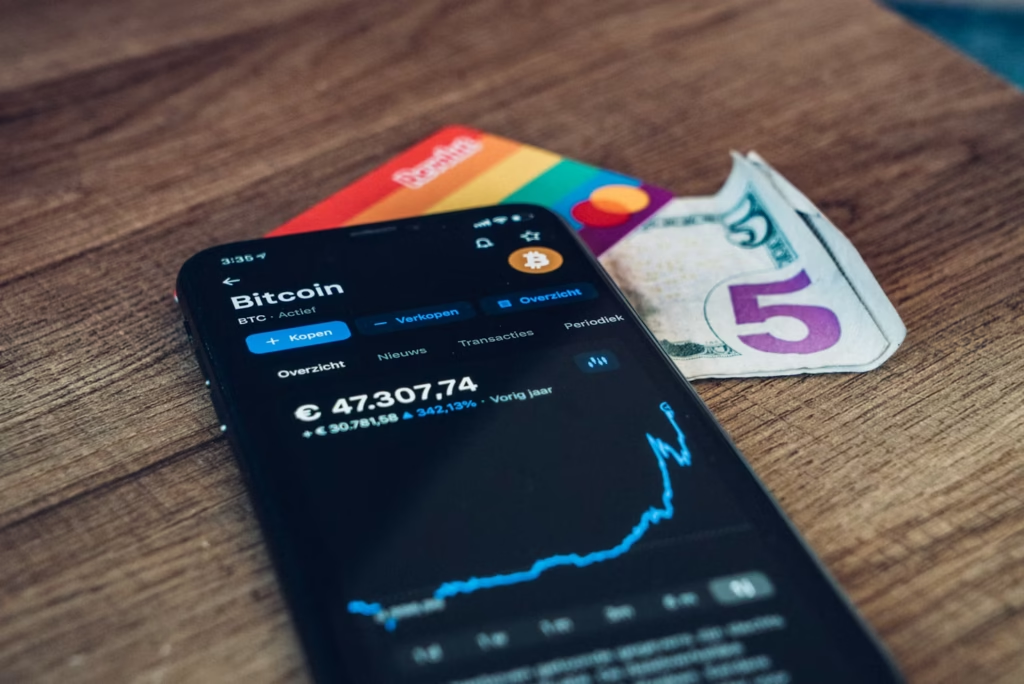
Hot wallets are connected to the internet. That makes them fast, convenient, and ideal for daily use but it also means they’re more vulnerable to hacks.
Best Use Cases for Hot Wallets
- Trading: Moving funds in and out of exchanges
- DeFi: Interacting with lending protocols, DEXs, and yield farms
- Small balances: Keeping what you plan to spend within a month
- NFTs: Most marketplaces require a hot wallet connection
Top Hot Wallet Options (2026)
MetaMask Still the king of browser-based wallets. Supports Ethereum, BNB Chain, Polygon, and most EVM-compatible chains. Over 30 million users. Best for DeFi and NFT interaction.
Trust Wallet Owned by Binance. Mobile-first, supports 70+ blockchains. Clean interface, built-in DApp browser. Great for beginners who want simplicity.
Coinbase Wallet Self-custody wallet from Coinbase (separate from the exchange). Good UX but limited chain support compared to MetaMask.
Cold Wallets: Security First
Cold wallets also called hardware wallets store your private keys entirely offline. They never touch the internet unless you physically connect them to sign a transaction.
If a hot wallet is your checking account, a cold wallet is your safety deposit box.
Best Use Cases for Cold Wallets
- Long-term holdings: Bitcoin you plan to hold for 1+ years
- Large balances: Any amount you’d be devastated to lose
- Estate planning: Multi-signature setups for family security
- Institutional storage: Business and fund treasuries
Top Cold Wallet Options (2026)
Ledger The industry standard. Nano X supports Bluetooth, Nano S Plus is the budget pick. Ledger Live software supports 5,000+ assets. Regular security audits.
Trezor Open-source firmware (Ledger’s is closed-source). Model T has a touchscreen. Preferred by privacy-conscious users.
KeepKey Budget option from ShapeShift. Good for beginners on a tight budget.
Hot vs Cold: Side-by-Side Comparison
| Factor | Hot Wallet | Cold Wallet |
|---|---|---|
| Security | Moderate (online) | Very High (offline) |
| Convenience | Excellent | Low (requires physical device) |
| Cost | Free | $50-$150 |
| Transaction speed | Instant | Minutes (connect + sign) |
| Best for | Active trading, DeFi | Long-term hodling, large amounts |
| Risk profile | Phishing, malware, browser exploits | Physical loss, damage, supply chain attacks |
The Golden Rule: Never Keep Everything in One Place
The smartest storage strategy in 2026 is simple:
- Hot wallet No more than 5-10% of your portfolio for active use
- Cold wallet The other 90%+ for long-term storage
- Exchange Only funds you’re actively trading, and only on reputable exchanges with strong track records
If you use an exchange for buying and selling, make sure it’s one with a proven security history. Binance, for example, has one of the industry’s largest Secure Asset Funds (SAFU) to protect user funds in extreme scenarios. Most of your long-term holdings should still live in your own wallet but for the portion you keep on an exchange, pick one that takes security seriously.
Common Wallet Mistakes to Avoid
1. Writing your seed phrase on your phone. Notes app, screenshot, Google Drive all terrible ideas. Use paper (engraved in metal if you’re serious) and store it in a safe.
2. Using the same wallet for everything. Your daily spending wallet should be separate from your savings wallet. If one gets compromised, you don’t lose everything.
3. Skipping the recovery test. Before putting real money into any wallet, do a test run: install, create, reset, and restore using your seed phrase. If you can’t restore it, you don’t own it.
4. Buying hardware wallets from third-party sellers. Always buy directly from the manufacturer (Ledger, Trezor). “Pre-seeded” wallets are scams designed to steal your funds.
Quick Decision Framework
Answer these three questions:
- Do you need to access this crypto within the next week? Hot wallet
- Is this more than 10% of your net worth? Cold wallet
- Are you interacting with DeFi or dApps? Hot wallet (but keep the amount small)
Your wallet strategy isn’t a one-time decision. As your portfolio grows, your storage needs change. Revisit this setup every 3-6 months.
The Bottom Line
There’s no single “best” crypto wallet. The right answer is a layered approach: hot for daily use, cold for long-term savings, and a trusted exchange for active trading. Match your storage to your goals, never share your seed phrase, and test your recovery before you need it.
Disclaimer: This article is for educational purposes only and does not constitute financial advice. Cryptocurrency investments carry risk. Always do your own research before choosing a wallet. Some links in this article are affiliate links.
Put This Into Practice
Hot wallets live on exchanges, so the exchange you choose is part of your security setup. Compare fees and features side by side with our free Exchange Comparison tool. Exchange Comparison Tool.
Related reading: how to choose a crypto wallet.
Related reading: how to keep crypto safe 2026 complete security guide.

Written by Guru Tony
Guru Tony is a cryptocurrency analyst and educator with over seven years of hands-on experience in blockchain technology, DeFi, yield strategies and crypto tax. He builds the free calculators on this site and tests every strategy he writes about with his own capital. Read more about our editorial approach.