
When I first heard about crypto staking, I had the same question everyone asks: “How much can I actually earn?” Not the theoretical 5-20% APY that every exchange advertises, but the real number — after compounding, after fees, after everything.
The Experiment
I decided to put it to the test. In January 2026, I staked 1.5 ETH through a non-custodial staking service. At the time, Ethereum was trading around $3,200, so my total investment was approximately $4,800. Here’s what happened over six months.
Month 1-2: The Slow Start
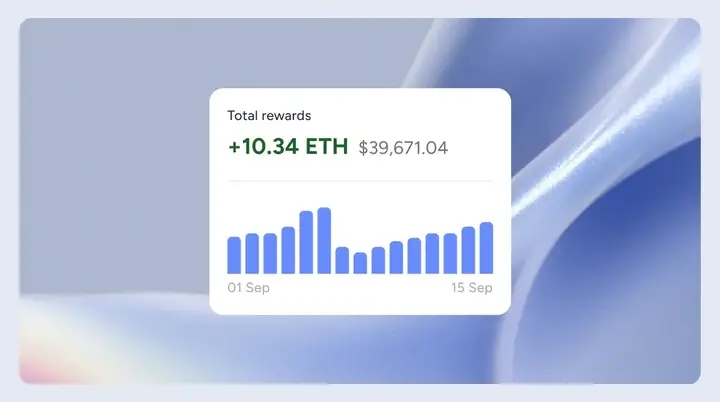
In the first two months, I earned roughly 0.014 ETH from staking rewards — about $45 at current prices. Not life-changing, but it was completely passive. I didn’t trade, I didn’t monitor charts, I just held.
The Ethereum staking APY during this period hovered around 3.2-3.5%. Lower than the 5-7% you’ll see advertised for smaller altcoins, but significantly safer. ETH staking is backed by the largest proof-of-stake network in crypto.
Month 3-4: Compounding Kicks In
This is where things got interesting. Because staking rewards are automatically compounded (assuming you’re using a liquid staking solution or auto-compounding pool), my rewards started earning rewards of their own.
By month 4, I had accumulated 0.031 ETH in total rewards — the equivalent of roughly $99. The effective monthly return had increased from ~$22/month to ~$27/month, purely from compounding.
Month 5-6: The Full Picture
After six full months of staking 1.5 ETH at an average APY of 3.4%, my total rewards came to 0.052 ETH. At current market prices, that’s approximately $166 in pure passive income.
Now here’s the kicker — ETH’s price also appreciated roughly 18% during this same period. So my total return was: $166 in staking rewards + ~$864 in price appreciation = $1,030 on a $4,800 investment = 21.5% total return in six months.
The Missed Opportunity
I made one mistake. I didn’t run the numbers before I started.
If I had used the Crypto Staking Calculator on WealthInCrypto before staking, I would have seen that increasing my stake to 2.5 ETH would have pushed my monthly rewards past the $50/month threshold — making it a real supplemental income stream instead of just “coffee money.”
The calculator lets you play with different amounts, APYs, and time horizons. When I plugged in 5 ETH at 3.5% APY for 12 months with compounding, the results showed over $1,700 in staking rewards alone. That would be ~$140/month — actual passive income.

What I Learned About Staking
- APY isn’t everything — higher APY often means higher risk or longer lock-up periods. ETH staking’s 3-4% is “boring” but reliable.
- Compounding is the silent killer (in a good way) — over 12+ months, the difference between simple and compound interest on staking is dramatic. Our calculator shows the exact difference.
- Staking + price appreciation is the real winner — the combination of earning yield and holding an appreciating asset creates a powerful wealth-building machine.
- Liquid staking changes the game — using stETH or rETH means you can still use your staked ETH in DeFi while earning rewards.
Should You Stake in 2026?
If you’re holding ETH anyway, not staking is literally leaving money on the table. The opportunity cost is zero — you just lock it up and earn.
For other coins like Solana (stakes around 6-8% APY), Cardano (~3-4%), or Polkadot (~12-14%), the calculator helps you compare which staking asset offers the best risk-adjusted return for your portfolio.
Before you commit to any staking strategy, run your numbers with our free calculator. It takes 30 seconds and could save you from the exact mistake I made — staking too little to make a real difference.
If you want a single platform to buy and stake your crypto, I personally use Binance for its low fees and wide staking options. For tracking your staking income across multiple chains, Koinly makes tax reporting a breeze.

Written by Guru Tony
Guru Tony is a cryptocurrency analyst and educator with over seven years of hands-on experience in blockchain technology, DeFi, yield strategies and crypto tax. He builds the free calculators on this site and tests every strategy he writes about with his own capital. Read more about our editorial approach.