


Imagine pouring $75 million into a flashy new crypto project marketed as the future of decentralized finance — only to wake up one day and find your entire stack, once worth over $100 million, completely locked away with no explanation. That’s exactly what happened to Tron founder Justin Sun in the ongoing drama with World Liberty Financial (WLFI), a Trump-family-linked DeFi venture. Now, Sun is firing back hard, claiming the project hides centralized controls that let insiders freeze anyone’s tokens at will. Is this a genuine decentralization failure, or just billionaire beef? Let’s break it down simply, step by step.
What is WLFI? Everything you need to know about World Liberty Financial ( WLFI) | Ace BNB on Binance Square
Who Is World Liberty Financial and Why Did It Matter?
World Liberty Financial launched with big promises: a truly decentralized platform for lending, borrowing, and crypto finance, backed by high-profile names tied to the Trump family. It positioned itself as a fresh alternative in DeFi, where users — not big institutions — would hold the power. Early investors, including Sun, bought in heavily, drawn by the vision of open, trustless finance.
But as with many crypto stories, the shine started to fade once real money and real code entered the picture. WLFI’s token, $WLFI, quickly became tradable, and that’s when things got messy.
Justin Sun’s Massive Investment — and the Sudden Freeze
Justin Sun didn’t just dip his toe in. As Tron’s founder and a well-known crypto whale, he poured roughly $75 million into WLFI, making him the project’s largest known private backer. For months, everything seemed fine. Then, in September 2025, Sun moved about $9 million worth of WLFI tokens between addresses — moves he later called simple “test deposits.”
What happened next shocked the crypto world: WLFI’s smart contract (basically, the unbreakable rules written into the blockchain) activated a hidden feature and blacklisted Sun’s wallet. Overnight, hundreds of millions of his tokens — valued at over $100 million at the time — were frozen solid. He couldn’t sell, transfer, or even use them. The tokens have since lost massive value as the price crashed, turning a huge paper gain into a painful loss.

Urgent Warning: $11.21M in Tron-based USDT Frozen in Alarming Incident
Sun’s Bombshell Claim: A Secret “Trap Door” in the Code
In a detailed public statement this month, Sun didn’t hold back. He accused WLFI of secretly embedding a “backdoor blacklist function” into the WLFI token’s smart contract — a feature never disclosed to investors. This tool, he says, gives the team (or whoever controls certain key wallets) the power to freeze, restrict, or even seize any holder’s tokens without warning, reason, or appeal.
Sun went further: he pointed to on-chain data showing that a single “guardian” externally owned account (EOA) — essentially one anonymous wallet — appears to hold unilateral power over a 3-of-5 multisig setup. In plain English, that means one person or small group can act alone to lock funds, bypassing the “multiple keys needed” safety that true decentralization usually requires. He demanded the WLFI team publicly reveal who controls these wallets and unlock his tokens immediately.
To Sun, this isn’t just a technical glitch — it’s the opposite of what DeFi is supposed to be. “A trap door marketed as an open door,” he called it.
WLFI’s Response: Misconduct Claims and Legal Threats
WLFI didn’t stay quiet. The project pushed back on social media, accusing Sun of spreading “baseless allegations” to cover his own actions. They claimed the freeze was justified due to suspicious activity and even threatened legal action with a blunt “See you in court.” WLFI insists their governance is fair and that they’ve addressed liquidity concerns through recent loans and repayments.
So far, no independent audit has fully settled the dispute, and the back-and-forth continues to dominate crypto headlines.
The Bigger Question: Is WLFI Really Decentralized?
At its core, this fight boils down to one word: decentralization. In true DeFi, no single person or company should control the keys. Smart contracts run automatically, and governance happens through community votes — not hidden admin switches.
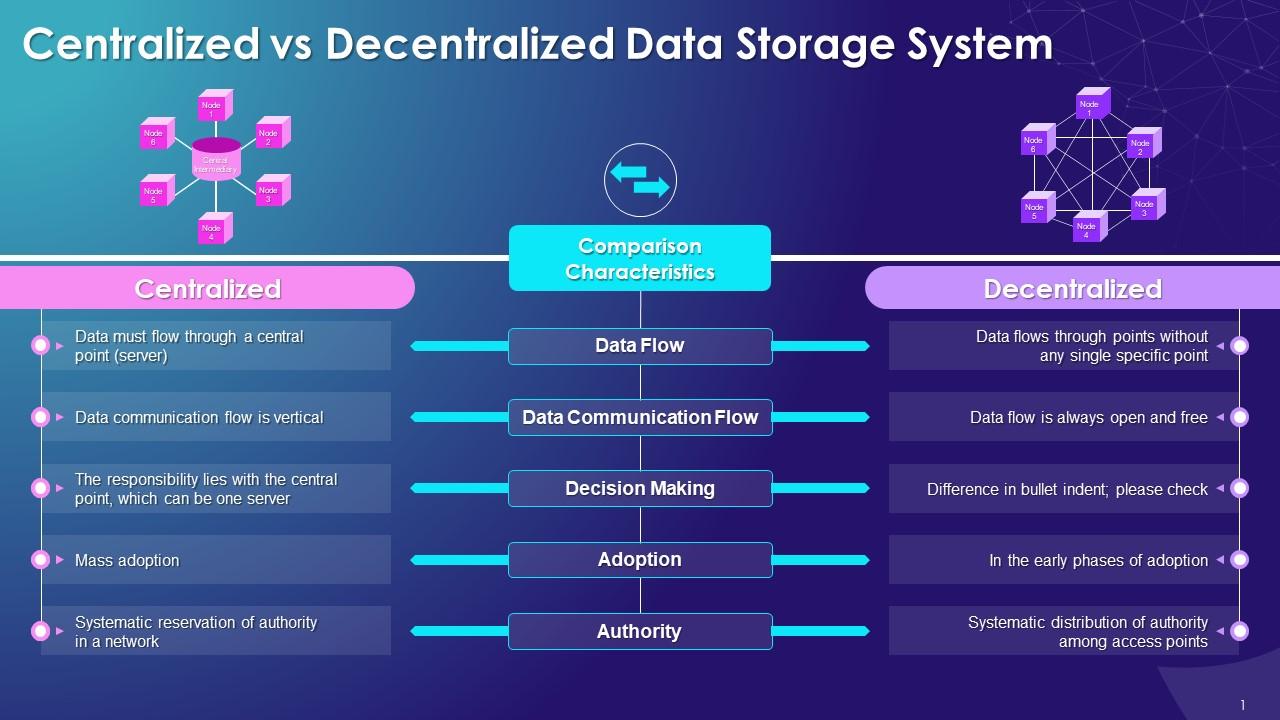
Comparison Of Centralized Vs Decentralized System Training Ppt PPT Example
Here’s a simple comparison to make it clear:
- Centralized control (what Sun alleges): One wallet or team can freeze assets anytime, like a traditional bank that can lock your account without asking.
- Decentralized ideal: Changes require broad agreement, and no one can arbitrarily seize funds. Your tokens stay yours.
Critics now wonder if WLFI ever truly delivered on its decentralized branding, especially with reports of concentrated voting power and upgradeable contracts that quietly added the blacklist feature later.
How This Affects Regular Crypto Users
You don’t need to be a billionaire like Justin Sun to care. If a major project can secretly freeze the largest investor’s wallet, what stops them from doing the same to smaller holders during a market dip, controversy, or even regulatory pressure?
This story highlights real risks in DeFi:
- Always check the smart contract for hidden admin functions (tools like Etherscan or Dune Analytics help).
- Look for transparent multisig setups where multiple independent parties must approve big changes.
- Remember: marketing hype about “decentralization” means nothing without verifiable code and governance.
The WLFI token itself has taken a beating — down sharply from its highs, with some reports citing losses of 70-80% amid the drama and broader liquidity issues.
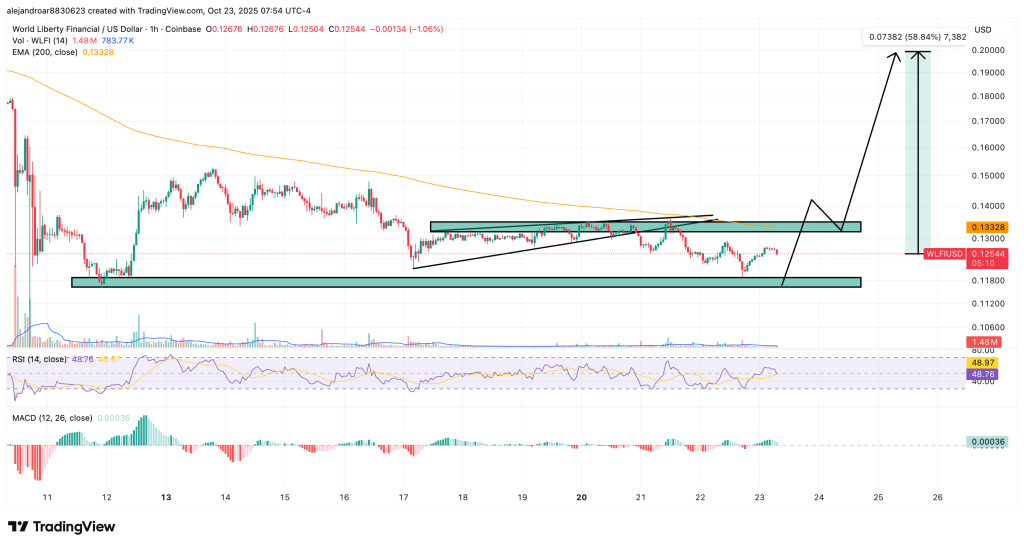
World Liberty Financial Price Prediction: WLFI Price Crashes Close to 30% in Two Weeks – Is a Drop Below $0.1 Next?
What Happens Next?
As of April 2026, the feud shows no signs of cooling. Sun continues pressing for answers, while WLFI defends its actions and eyes legal routes. The outcome could set a precedent: either it forces more projects to prove their decentralization claims, or it reminds everyone that even “Trump-backed” ventures can carry the same old centralization risks as traditional finance.
Crypto moves fast, and trust is everything. Whether Justin Sun is 100% right or this is partly personal, his $100 million freeze has sparked a much-needed conversation. In a space built on “not your keys, not your coins,” hidden controls feel like a betrayal of the original dream.
What do you think — is this proof that some “DeFi” projects are more centralized than they admit, or just another high-stakes crypto spat? Drop your thoughts below. Either way, this drama is far from over, and smart investors are watching closely.


