Turning Everyday Smartphones into Personal Health Assistants
What if your phone could quietly analyze your symptoms, review your health data, and offer informed insights — all without sending anything to the cloud? Tether, the company behind the world’s largest stablecoin USDT, has made this possible with its latest AI breakthrough. On May 7, 2026, Tether’s AI Research Group launched QVAC MedPsy, a powerful medical AI model family that runs directly on smartphones and wearables.
This isn’t science fiction or a distant future promise. It’s available now, emphasizing privacy, speed, and accessibility for ordinary people who want better health insights without relying on big tech servers.
What Exactly Is QVAC AI?
QVAC stands for a decentralized, local-first AI platform developed by Tether. Unlike traditional AI tools that send your questions to distant data centers, QVAC runs intelligence directly on your own device. This approach keeps your personal information completely private and works even without an internet connection.
The platform includes tools for developers and ready-to-use apps. The standout new addition is QVAC MedPsy, a specialized medical reasoning model optimized for low-power devices like phones.
QVAC MedPsy: Small Model, Big Medical Performance
Tether released two versions: a tiny 1.7 billion parameter model and a 4 billion parameter version. Despite their compact size, they deliver impressive results:
- The 1.7B model outperforms Google’s larger MedGemma-4B on multiple medical benchmarks and even beats the much bigger MedGemma-27B (nearly 16 times larger) on realistic clinical conversation tests graded by physicians.
- The 4B version scores even higher, achieving strong results across medical exams, clinical reasoning, and global health contexts.
These models were trained with a careful focus on high-quality medical data, clinical reasoning, and reinforcement learning for tough scenarios. The result is an AI that can handle multi-turn conversations about health concerns efficiently on your phone.
H3: Why On-Device Matters for Health
Running AI locally means:
- Your symptoms, medical history, and biometric data never leave your device.
- Instant responses with no internet delay.
- Works offline — perfect for travel or areas with poor connectivity.
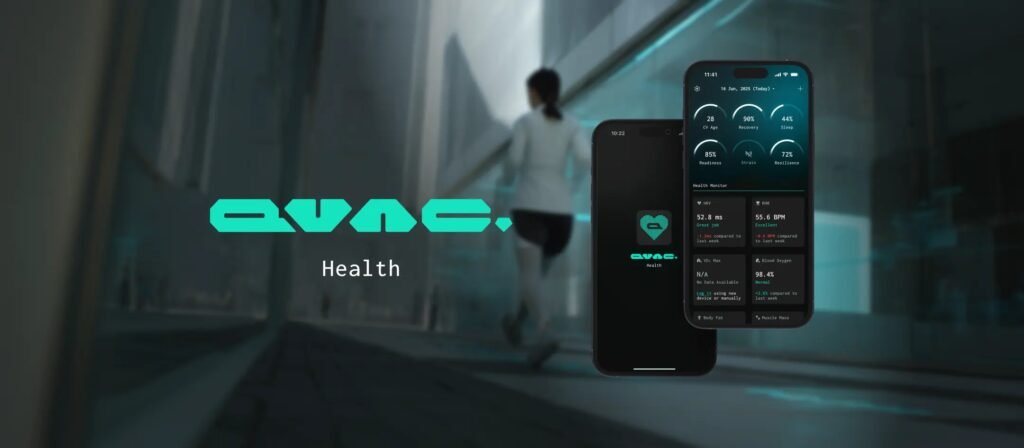
QVAC Health: Your Private Wellness Companion
Alongside the models, Tether offers the QVAC Health app. It acts as a personal dashboard that analyzes data from your phone’s sensors, wearables, activity trackers, and even manual inputs like symptoms or medical records.
Users can ask questions in natural language, get wellness suggestions, track trends in heart rate, steps, sleep, and more — all processed securely on-device. The app emphasizes that no personal health data is ever sent to external servers.
Benefits for Everyday People
This technology lowers the barrier to better health management:
- Privacy-first users gain peace of mind knowing sensitive information stays on their phone.
- People in remote areas can access intelligent health insights without reliable internet.
- Busy individuals get quick, conversational support for understanding symptoms or tracking wellness goals.
- Cost efficiency: No need for expensive subscriptions to cloud AI services.
Tether positions QVAC as part of a broader push toward “Stable Intelligence” — reliable, decentralized AI that empowers users rather than centralizing control.
Important Limitations and Responsible Use
While powerful, these tools are not replacements for professional medical advice. QVAC MedPsy and the Health app provide general information and wellness support. Users should always consult qualified doctors for diagnoses, treatments, or serious concerns. The models focus on reasoning and information synthesis rather than definitive clinical decisions.
Tether has open-sourced parts of the models, encouraging transparency and community improvements while maintaining high standards for safety in health applications.
The Bigger Picture: Tether’s Move Beyond Crypto
Known primarily for USDT, Tether is expanding into AI infrastructure with a focus on decentralization and edge computing. QVAC represents a strategic step to make advanced AI accessible on everyday devices, potentially impacting not just health but also other areas like translation, personal productivity, and robotics in the future.
For regular smartphone users, this means the power once reserved for high-end servers or expensive gadgets is now slipping into your pocket — privately and efficiently.
As local AI technology matures, tools like Tether’s QVAC could reshape how we interact with health information, making informed wellness a more personal and private experience. The coming months will reveal how quickly developers and users adopt these capabilities.
Sources include official announcements from Tether and QVAC, benchmark details from Tether’s AI Research Group, and coverage by Crypto Briefing, Yahoo Tech, and the QVAC platform documentation.