The on-chain value of tokenized real-world assets (RWAs) has surged past $26 billion in early 2026, marking a pivotal moment where traditional finance meets blockchain technology. This milestone isn’t just a number—it’s proof that everyday assets like government bonds, private loans, and even commodities are being digitized and traded on public blockchains with greater efficiency and accessibility.
Major exchanges are responding quickly. For instance, Australian crypto platform BTC Markets has notified regulators of its intent to seek a license for trading regulated tokenized RWAs alongside cryptocurrencies, aiming for seamless, instant-settlement markets. This push highlights how the $26 billion on-chain figure (tracked by platforms like RWA.xyz, excluding stablecoins) is fueling broader infrastructure changes.
What Are Real-World Assets (RWAs) in Crypto?
Real-world assets, or RWAs, refer to traditional items of value—think U.S. Treasury bonds, real estate, corporate debt, gold, or private credit—that get “tokenized.” Tokenization means representing ownership or rights to these assets as digital tokens on a blockchain.
Instead of paperwork and slow settlements, ownership transfers happen almost instantly, 24/7, with transparency built in. This bridges traditional finance (TradFi) and decentralized finance (DeFi), letting regular investors access opportunities once limited to big institutions.
A 2025 academic study on arXiv examining over $25 billion in tokenized RWAs noted that while issuance is strong, secondary trading remains limited, with many assets held long-term by institutions rather than flipped frequently.
Why Has the On-Chain RWA Value Exploded to $26 Billion?
The jump to over $26 billion (with some trackers showing $26.4–$26.5 billion as of March 2026) comes from nearly quadrupling in just one year—from around $6.4–$6.6 billion previously. Key drivers include:
- Institutional heavyweights like BlackRock (with its BUIDL fund), Fidelity, and WisdomTree launching tokenized products, especially U.S. Treasuries.
- Six major categories now exceeding $1 billion each: U.S. Treasuries, private credit, commodities, corporate bonds, non-U.S. government bonds, and institutional alternative funds.
- Blockchain networks like Ethereum dominating with over 57% market share in distributed asset value.
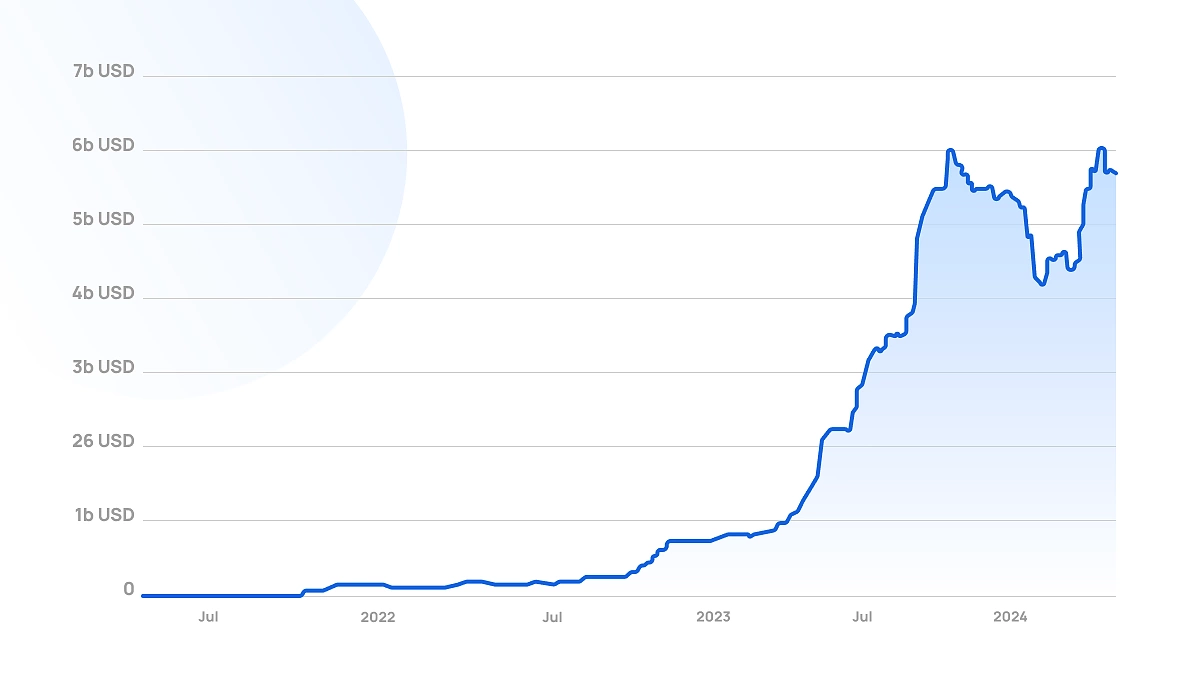
This chart illustrates the rapid growth in tokenized RWA value over the past year.
Tokenized U.S. Treasuries lead the pack, often yielding stable returns backed by government debt, while private credit offers higher yields (typically 8–12%) for those willing to take on more risk.

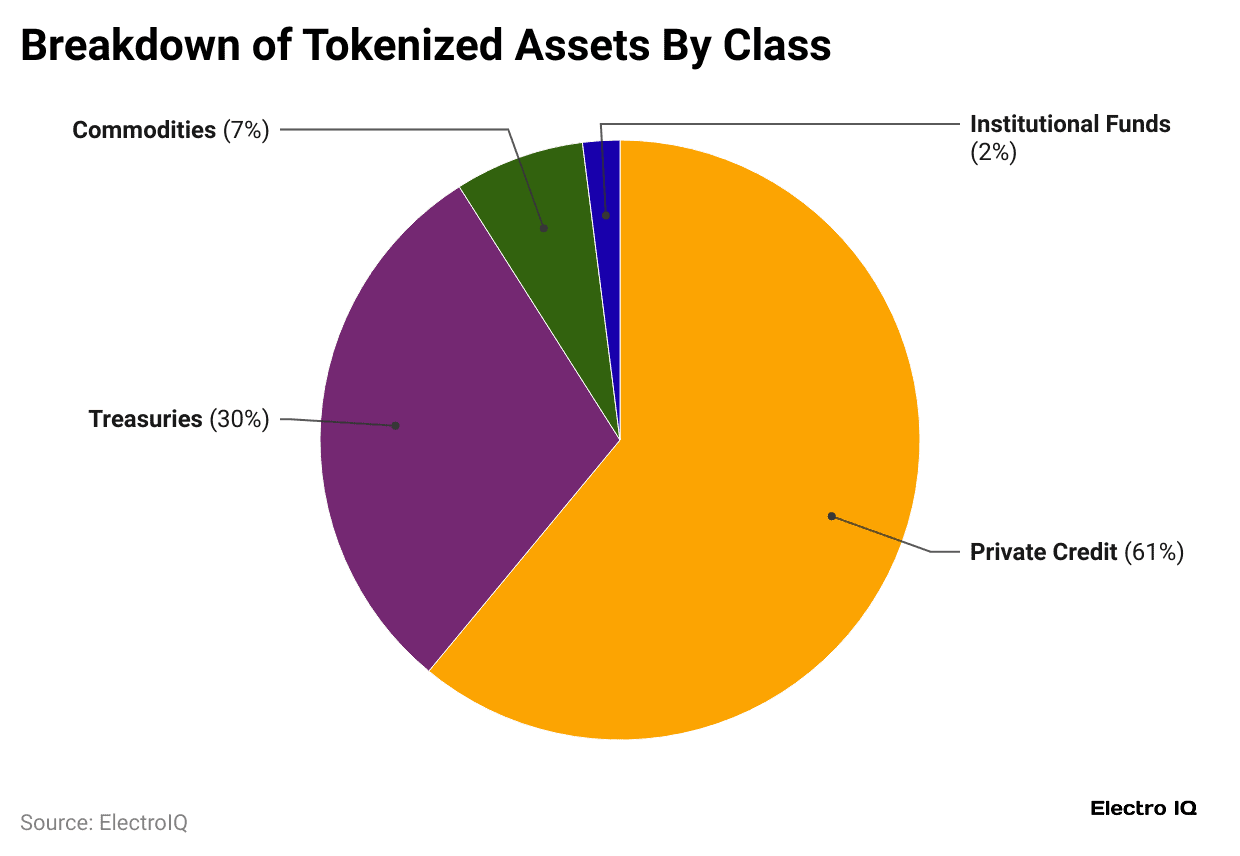
Visual representation of tokenized asset categories exceeding $1 billion on-chain.
How Bitcoin and Crypto Markets Tie Into the RWA Boom
While RWAs focus on traditional assets, the surge benefits Bitcoin and broader crypto markets in several ways. Bitcoin often acts as a gateway asset—many newcomers enter crypto via BTC before exploring RWAs.
Exchanges like BTC Markets see RWAs as a way to create unified platforms where crypto (including BTC) and tokenized stocks, bonds, or funds trade side-by-side. This could boost liquidity and attract more capital into the ecosystem.
Experts like Bitwise CIO Matt Hougan project explosive future growth, forecasting the tokenized RWA market could expand from $26 billion today to as much as $200 trillion in the long term, drawing from massive traditional pools like $110 trillion in global stocks and $140 trillion in bonds.
What This Means for Everyday Investors
For the average person, RWAs lower barriers. You might soon invest in fractions of high-quality bonds or real estate through your crypto wallet, without needing a broker or large minimums. Benefits include:
- Faster settlements — trades clear in minutes, not days.
- Greater transparency — blockchain records are public and immutable.
- Global access — anyone with internet can participate, potentially democratizing wealth-building.
However, risks remain: regulatory hurdles, smart contract vulnerabilities, and market illiquidity in some segments. Always research platforms and start small.
BlackRock’s BUIDL drives 92% surge in tokenized US treasury market
Example of a tokenized Treasury product dashboard, showing real-time on-chain yields.
The Road Ahead: From $26 Billion to Trillions?
Projections vary, but momentum is clear. Some forecasts see the tokenized asset market growing at over 40% annually through the early 2030s, potentially reaching trillions as more banks, funds, and regulators join in.
Platforms are building the rails—shared liquidity pools (like those in Aave’s Horizon initiative), regulated trading venues, and cross-chain compatibility. If adoption continues, RWAs could reshape how we save, invest, and transfer value worldwide.
The $26 billion milestone isn’t the peak—it’s the starting line for a more connected, efficient financial future. Whether you’re a crypto enthusiast or just curious about the next big thing in investing, keeping an eye on RWAs could pay off.