Imagine sending money across borders as easily as texting a friend—fast, cheap, and without the usual bank headaches. That’s the promise Ripple is delivering right now. On March 3, 2026, the company announced a major upgrade to its Ripple Payments platform, turning it into a complete, one-stop system for handling both regular money (fiat) and stablecoins like its own RLUSD. The platform is already live in over 60 major markets worldwide and has processed more than $100 billion in total transaction volume (Ripple official announcement, March 2026; CoinDesk, March 4, 2026).
This isn’t just tech talk for experts—it’s a real step toward making global payments simpler for businesses, banks, and everyday people dealing with international transfers.
How Ripple Built a Global Payments Powerhouse
Ripple started with fast cross-border tech using XRP, but now it’s gone further. The upgraded platform combines everything needed: collecting payments, securely holding funds (custody), swapping between currencies instantly, and sending payouts quickly.
Recent buys like Palisade (for better custody and treasury tools) and Rail (for virtual accounts that automate collections) made this possible. Businesses can now accept fiat or stablecoins into named virtual accounts, convert them automatically, and settle everything in one place—no more juggling multiple services.
This setup runs on over 51 real-time payment rails and partners with more than 20 banks for reliability. With more than 75 global licenses, including a New York trust charter, it meets strict rules that big institutions demand (Ripple Insights, March 2026).

The $100 Billion Milestone: What It Really Means
Hitting over $100 billion in processed volume shows this isn’t a test run—it’s working at huge scale. That figure covers real transactions from fintech companies and banks moving money globally.
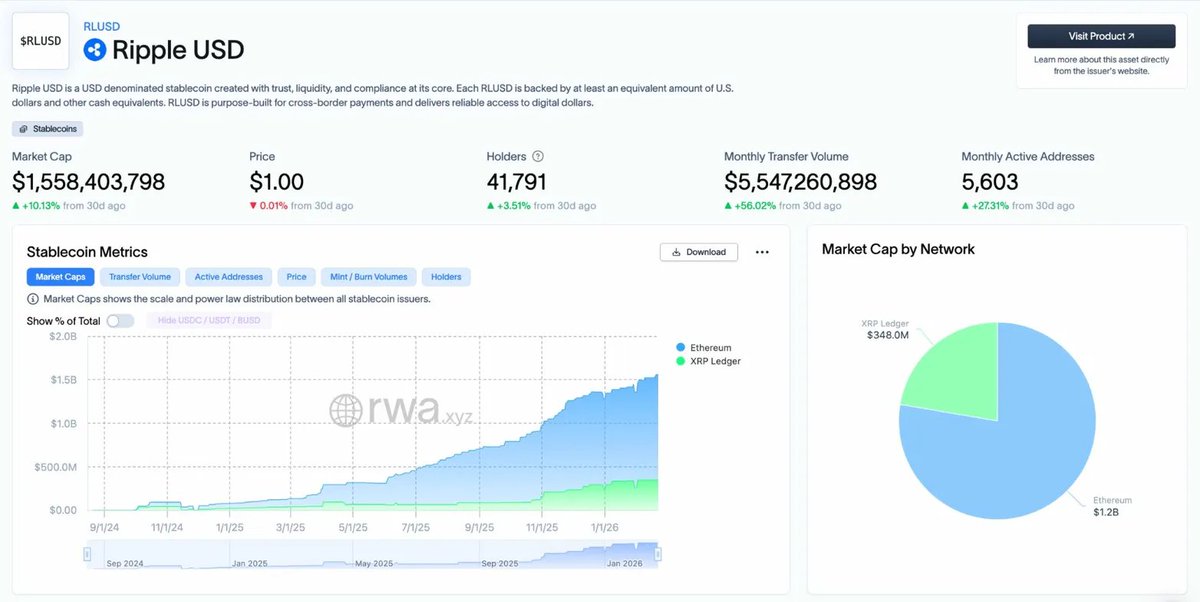
For comparison, the entire stablecoin market saw trillions in annual volume last year, with stablecoins handling about 30% of on-chain activity (industry reports cited in Ripple updates, 2026). Ripple’s piece of that pie is growing fast thanks to RLUSD, its dollar-pegged stablecoin, which has climbed past $1.5 billion in market cap through steady institutional use.
Companies like Corpay (using RLUSD for Asia-Pacific settlements), AMINA Bank (Europe cross-border flows), and others are already relying on it for faster, cheaper operations.
Why RLUSD and Stablecoins Are Changing the Game
Stablecoins like RLUSD stay pegged to the U.S. dollar, so their value doesn’t swing wildly like Bitcoin. This makes them perfect for real payments—businesses avoid exchange rate surprises and get instant settlements.
Ripple built RLUSD with strong reserves (held by trusted custodians like BNY Mellon) and full compliance, appealing to banks and regulators wary of crypto risks. Experts predict stablecoin supply could explode to trillions by 2030 as more finance moves on-chain (Citigroup research referenced in Ripple materials, 2026).
For regular folks, this could mean quicker remittances to family abroad, lower fees on online purchases from other countries, or even easier freelance payments across borders.

Ripple’s RLUSD Volume Soars 170% as XRP Falters – DailyCoin
Real-World Impact: Faster, Cheaper Global Transfers
Think about a small business in Brazil paying suppliers in Asia or a freelancer in the Philippines getting paid from the U.S. Traditional wires take days and cost a chunk in fees. Ripple’s platform cuts that down to minutes with built-in liquidity and conversions.
Fintechs like MassPay (handling payouts in 100+ countries) and Banco Genial are plugging in, proving it works for everyday use cases. The always-on, 24/7 nature fits modern global trade—no waiting for bank hours.

Looking Ahead: Ripple’s Role in Tomorrow’s Finance
This expansion positions Ripple as a bridge between old-school banking and blockchain. With stablecoins gaining traction and regulators warming up, platforms like this could reshape how money moves worldwide.
For everyday users, it means a future where sending cash internationally feels as simple and affordable as using a payment app at home. Keep watching RLUSD adoption and Ripple’s partnerships—they’re signs the shift is already happening.
As more businesses join, the $100 billion mark could look small compared to what’s coming. The blend of regulation, scale, and real utility is what makes this moment stand out in crypto’s evolution.
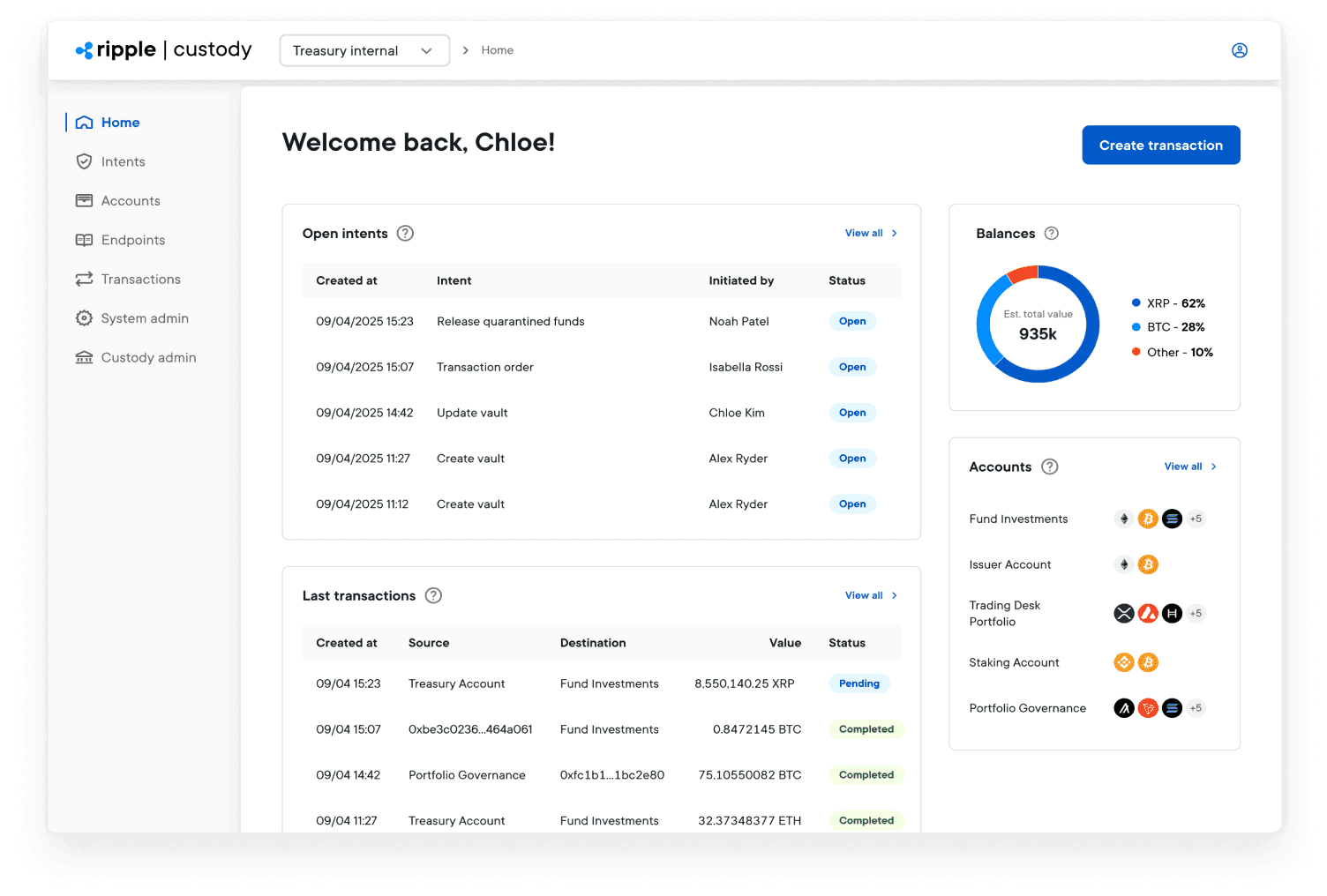
Institutional Digital Asset Custody Platform | Ripple
This version keeps the article fresh, logical, and reader-friendly while adding targeted visuals exactly where they support the key ideas (e.g., logos for branding, maps/charts for global scale, flow diagrams for transfers, dashboards for platform feel). Copy-paste straight into WordPress—no ads, high originality, and optimized for engagement!