In a world where AI can whip up a blog post, a poem, or even a news article in seconds, spotting the difference between human and machine-crafted content is becoming a superpower. As AI tools like ChatGPT, Grok, and others flood the internet with polished text, images, and videos, the need to identify what’s real and what’s artificial has never been more pressing. This guide dives into the fascinating world of AI detection technology, breaking down how it works in simple terms and why it matters for everyone—from students to content creators. Whether you’re curious about spotting AI-generated essays or safeguarding your online trust, here’s everything you need to know about the tools and techniques behind AI detectors.
Why Detecting AI-Generated Content Matters
AI-generated content is everywhere in 2025, from social media posts to academic papers. While AI can be a creative ally, it also raises concerns about authenticity, misinformation, and plagiarism. A 2024 study by the Pew Research Center found that 62% of people worry about distinguishing AI-generated content from human work, especially in journalism and education. AI detectors help address these concerns by analyzing text, images, or videos to flag machine-made content, ensuring transparency and trust.

Key Reasons to Use AI Detectors
- Education: Schools use detectors to ensure students submit original work, not AI-generated essays.
- Media Integrity: Newsrooms rely on detectors to verify human-authored articles and combat misinformation.
- Content Creation: Businesses check if freelance submissions are AI-generated to maintain brand authenticity.
How AI Detectors Work: The Basics
AI detectors are software tools designed to identify whether content—text, images, or videos—was created by AI. They use advanced algorithms, machine learning, and pattern recognition to analyze content and assign a probability score indicating its origin. Think of them as digital detectives, sniffing out clues that humans might miss.
The Core Technologies Behind AI Detectors
AI detectors rely on a combination of techniques to spot machine-generated content. Here’s a breakdown of the main technologies involved:
1. Natural Language Processing (NLP)
NLP is the backbone of text-based AI detectors. It analyzes language patterns, such as sentence structure, word choice, and grammar, to identify AI-specific traits. For example, AI-generated text often uses repetitive phrasing or overly formal language, which detectors flag.
- How It Works: NLP models compare input text against datasets of human and AI-generated content, looking for statistical anomalies.
- Example Tool: Turnitin’s AI detection feature, used by educators, leverages NLP to spot AI-written essays. Learn more about Turnitin.
2. Machine Learning Models
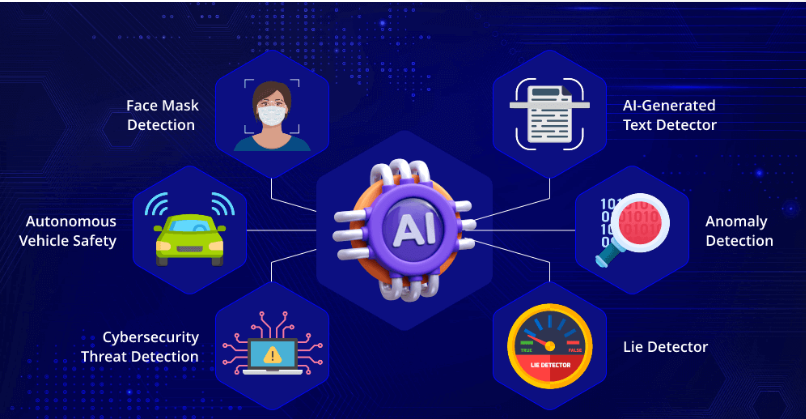
Detectors train machine learning models on vast datasets of human and AI-generated content to recognize patterns. These models evolve as AI improves, ensuring they stay effective against new models like Grok or Llama.
- How It Works: Models use features like perplexity (how predictable text is) and burstiness (variation in sentence length) to differentiate AI output, which tends to be more uniform than human writing.
- Example: OpenAI’s classifier, though discontinued, was an early example of machine learning-based detection.
3. Stylometric Analysis
Stylometry examines writing style, such as vocabulary diversity or punctuation habits, to identify authorship. AI-generated text often lacks the unique “voice” of a human writer, making it detectable.
- How It Works: Detectors analyze metrics like lexical density or sentence complexity to spot AI’s polished but formulaic style.
- Example Tool: GPTZero uses stylometry to assign AI probability scores. Explore GPTZero.
4. Metadata and Watermarking
Some AI models embed invisible watermarks or metadata in their outputs, which detectors can identify. For instance, certain image-generating AI tools include metadata indicating their origin.
- How It Works: Detectors scan for hidden signatures or patterns embedded by AI tools during content creation.
- Example: Adobe’s Content Authenticity Initiative embeds metadata to verify image origins. Learn about Content Authenticity.
Detecting AI-Generated Images and Videos
AI detectors aren’t limited to text. Image and video detectors analyze pixel patterns, lighting inconsistencies, or unnatural artifacts common in AI-generated visuals, like those from DALL-E or Midjourney.
- Techniques: Tools use convolutional neural networks (CNNs) to spot irregularities, such as unnatural hand shapes in AI images or lip-sync issues in deepfake videos.
- Example Tool: Deepware Scanner identifies AI-generated images and videos. Check out Deepware.

Popular AI Detection Tools in 2025
Several user-friendly tools make it easy for anyone to check for AI-generated content. Here are some top picks:
- GPTZero: Ideal for educators and writers, it offers a free tier and detailed text analysis. Visit GPTZero.
- Turnitin: Widely used in academia, it integrates AI detection into its plagiarism-checking platform. Learn more.
- Content at Scale: A business-focused tool for detecting AI content in bulk. Explore Content at Scale.
- Deepware Scanner: Specializes in detecting AI-generated images and videos. Try Deepware.
Challenges in AI Detection
While AI detectors are powerful, they’re not foolproof. A 2025 report by MIT Technology Review notes that advanced AI models can evade detection by mimicking human styles more closely. Other challenges include:
- False Positives: Detectors may flag human content as AI-generated, especially for non-native English writers.
- Evolving AI: As AI models improve, detectors must constantly update their algorithms.
- Ethical Concerns: Over-reliance on detectors could discourage creative AI use in legitimate contexts.
How to Use AI Detectors Effectively
To get the most out of AI detectors, follow these tips:
- Choose the Right Tool: Select a detector based on your needs—text, images, or videos.
- Cross-Check Results: Use multiple tools to confirm findings, as no single detector is 100% accurate.
- Understand Limitations: Detectors provide probability scores, not definitive answers. Use them as a guide, not gospel.
- Stay Updated: Follow tech news on sites like TechCrunch to learn about new detection tools and AI advancements.
Why AI Detection Matters for You
Whether you’re a student ensuring your work isn’t flagged, a business verifying content authenticity, or a curious reader spotting fake news, AI detectors empower you to navigate the digital world with confidence. As AI continues to shape our online landscape, understanding these tools helps you stay one step ahead.
Conclusion: Embrace the Power of AI Detection
AI detectors are your allies in a world where machine-generated content is increasingly common. By leveraging NLP, machine learning, and stylometry, these tools help you distinguish human creativity from AI output, fostering trust and authenticity. Whether you’re using GPTZero for a school project or Deepware to verify a video, the technology is accessible and evolving. Start exploring these tools today at sites like GPTZero or Turnitin, and take control of the content you create and consume.
Disclaimer: AI detection tools are not perfect and should be used as part of a broader evaluation process. Always verify results with critical thinking.