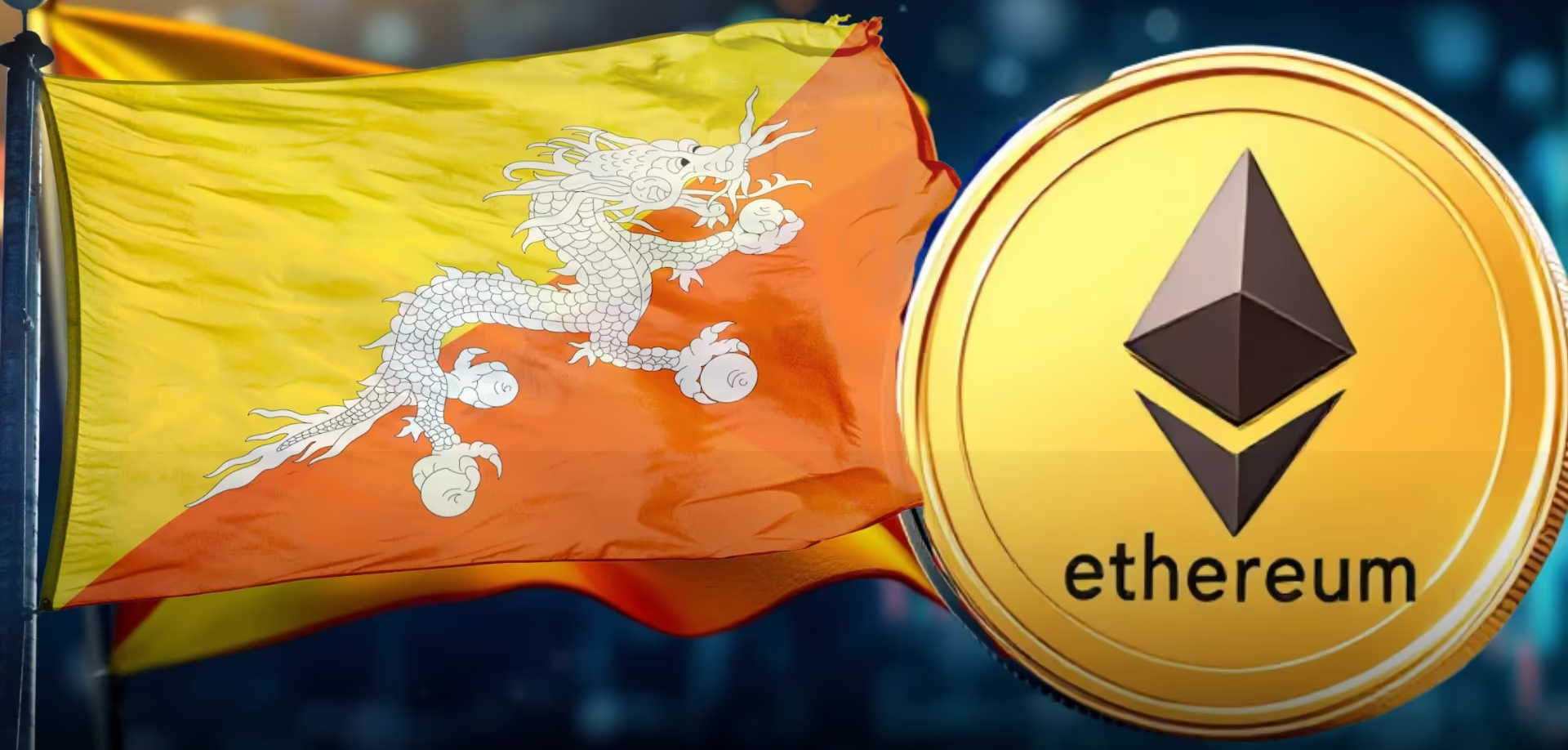
What happens when a small Himalayan kingdom known for measuring success in happiness decides to leap into the future of digital security? Bhutan, with its population of under a million, just made history by anchoring its national digital identity system on Ethereum, the world’s leading public blockchain. Announced on October 13, 2025, this move isn’t about chasing crypto trends—it’s about giving citizens unbreakable control over their personal data in an increasingly connected world. From verifying age at a local shop to accessing government services online, this breakthrough promises a safer, more private digital life for everyone involved. Let’s explore how this tiny nation is setting a big example.

Bhutan’s Path to Digital Empowerment
Bhutan’s journey into blockchain began quietly a few years back, but it accelerated with the launch of its National Digital Identity (NDI) platform. Initially built on Polygon—a sidechain known for speed and low costs—the system aimed to give citizens self-sovereign identities, meaning individuals own and control their data without relying on central authorities. This setup allowed for things like secure logins and verifiable credentials, all stored on a blockchain for tamper-proof records.
Fast-forward to 2025, and Bhutan recognized the need for even stronger foundations. With nearly 800,000 residents now using digital IDs for everything from banking to healthcare, the government sought a more decentralized and resilient network. Ethereum, with its battle-tested security and global developer community, emerged as the ideal choice. This migration marks Bhutan as the pioneer in fully integrating a national ID system with a major public blockchain, blending ancient values of harmony with cutting-edge tech.
Why Ethereum? The Strategic Choice
Switching blockchains isn’t like changing phone providers—it’s a meticulous process driven by clear advantages. Bhutan’s leaders cited Ethereum’s unparalleled decentralization as key, ensuring no single entity can control or alter identity data. Unlike Polygon, which is efficient but tied to Ethereum as a layer-2, going direct to the main chain adds layers of security against hacks and downtime.
The decision also aligns with Bhutan’s eco-conscious ethos. Ethereum’s shift to proof-of-stake in 2022 slashed energy use by 99%, making it greener than older systems. Plus, with Ethereum’s vast ecosystem, Bhutan can tap into tools for advanced features like zero-knowledge proofs, which let users prove facts (like being over 18) without revealing extra info. This upgrade isn’t just technical; it’s about building trust in a digital age where data breaches make headlines weekly.

Step-by-Step: The Migration Process
The transition kicked off in October 2025, with the Ethereum-based system already operational for new verifications. Over the next few months, all existing authentication data from Polygon will migrate seamlessly, wrapping up by early 2026. Citizens won’t need to do much—updates happen behind the scenes via secure protocols.
For users, it starts with downloading the NDI app, scanning a QR code, or linking a wallet. Once set up, your ID lives on your device, anchored to Ethereum’s ledger for global verification. No more carrying physical cards or worrying about lost passwords; blockchain ensures your info is always accessible yet private. This user-friendly approach demystifies tech, making it as simple as checking email for the average Bhutanese farmer or teacher.
Everyday Wins: Security and Privacy for Citizens
Imagine proving your identity for a loan without handing over your life story—that’s the power of self-sovereign IDs. In Bhutan, this means reduced fraud risks, as Ethereum’s encryption makes tampering nearly impossible. For the 800,000 citizens, it translates to faster services: Renew a license or vote online with a tap, all while keeping personal details hidden.
Privacy is a big win too. Unlike traditional databases vulnerable to leaks, blockchain distributes data across thousands of nodes worldwide, so no hacker can wipe out an entire system. It’s empowering, especially in a country where community and well-being come first, fostering a sense of ownership over one’s digital self.
Ripple Effects: Inspiring the World
Bhutan’s bold step isn’t isolated—it’s a beacon for other nations eyeing blockchain for governance. Countries like Estonia and Singapore have digital IDs, but Bhutan’s full Ethereum integration sets a new bar for openness and resilience. Even Ethereum co-founder Vitalik Buterin has spotlighted this, visiting Bhutan to discuss how such systems can promote global equity.
This could spark a wave of adoptions, showing how small nations can lead in tech innovation. For developing countries, it offers a cost-effective way to leapfrog outdated infrastructure, potentially reducing corruption and boosting economic inclusion.
Looking Ahead: Bhutan’s Digital Horizon
As the migration completes in Q1 2026, Bhutan plans expansions like integrating IDs with international travel or e-commerce. Challenges remain, like ensuring rural access and educating users, but early pilots show promise. In a world grappling with AI deepfakes and cyber threats, Bhutan’s Ethereum-powered IDs offer a glimpse of a secure, user-centric future. Who knew a kingdom famed for Gross National Happiness could also pioneer digital trust? Keep watching—this story is just beginning.