Ever wondered how blockchain could reliably pull in real-world data—like stock prices or weather updates—without a hitch? Enter Chainlink, the tech that’s been quietly powering this magic for years. Now, with the SEC’s fresh nod to the first U.S. spot ETF for Chainlink, everyday investors like you can jump in without navigating the wild crypto exchanges. This isn’t just another approval; it’s a doorway to simpler, regulated investing in one of blockchain’s unsung heroes. Let’s break it down step by step, from what Chainlink does to how you can get started today.
Understanding Chainlink: The Bridge Between Worlds
Chainlink isn’t your typical cryptocurrency—it’s more like a trusty messenger that feeds accurate, tamper-proof data into smart contracts on blockchains. Think of smart contracts as automated agreements that run themselves, but they need real-world info to work properly. Without oracles like Chainlink, blockchains would be isolated islands, cut off from things like election results or commodity prices.
Launched in 2017, Chainlink has grown into a go-to solution for decentralized finance (DeFi), insurance, and even gaming. Its native token, LINK, powers the network by incentivizing data providers to stay honest. As of early 2026, Chainlink’s market cap hovers around $10 billion, reflecting its steady adoption by big players like Google Cloud and Swift. For beginners, imagine Chainlink as the GPS for blockchain—guiding decisions with reliable directions from the outside world.

Chainlink: The Industry-Standard Oracle Platform
What sets it apart? Security and decentralization. Unlike centralized alternatives, Chainlink uses a network of independent nodes to verify data, reducing risks of manipulation. This has made it essential for over 1,000 projects, handling billions in value securely.
The Game-Changer: SEC’s Approval of the First Chainlink Spot ETF
January 2026 kicked off with a bang when the U.S. Securities and Exchange Commission (SEC) gave the green light to Bitwise’s Chainlink Spot ETF, ticker symbol CLNK. This marks the first time American investors can buy into Chainlink directly through a regulated exchange-traded fund (ETF), listed on the NYSE Arca. No more dealing with crypto wallets or volatile exchanges—just straightforward shares like any stock.
Why is this huge? Spot ETFs track the actual price of the asset, unlike futures-based ones that can be more complicated and less accurate. The approval follows a wave of similar nods for Bitcoin and Ethereum, signaling maturing crypto regulations. Bitwise, a trusted name in crypto funds, filed for this back in late 2025, and the SEC’s decision opens doors for institutional money to flow in, potentially stabilizing LINK’s price. Analysts predict this could boost Chainlink’s visibility, much like how Bitcoin ETFs drew billions in inflows last year.

Canary Capital Seeks SEC Approval for ETF on President Trump’s …
For regular folks, it means lower barriers: You can invest via your retirement account or brokerage app, with the ETF holding actual LINK tokens under custody. Launching just days ago, CLNK has already seen enthusiastic trading volumes, hinting at growing investor confidence.
Step-by-Step Guide: How to Invest in the Chainlink ETF
Ready to dip your toes? Investing in the Chainlink Spot ETF is as simple as buying shares in Apple or Tesla. Here’s a straightforward walkthrough tailored for newcomers—no finance degree required.
First, choose a brokerage. Popular ones like Vanguard, Fidelity, or Robinhood support ETFs. If you don’t have an account, sign up—it’s free and takes minutes. Next, fund your account by linking a bank and transferring money.
Search for the ticker CLNK in your app or site. Read the prospectus for details on fees (expect around 0.25% annually) and holdings. Decide how much to invest—start small, say $100, to test the waters. Place a market order to buy at the current price, or a limit order for a specific one.
Once bought, monitor via your portfolio. Dividends? Not likely, as it’s crypto-based, but price appreciation could come from Chainlink’s growth. Remember, sell anytime during market hours. For tax perks, consider holding in an IRA.

Infographic: 6 Steps to Your First Dividend ETF | Easy Peasy …
Pro tip: Diversify. Don’t put all eggs in one basket—pair this with other assets for balance.
Risks and Rewards: Weighing Your Options
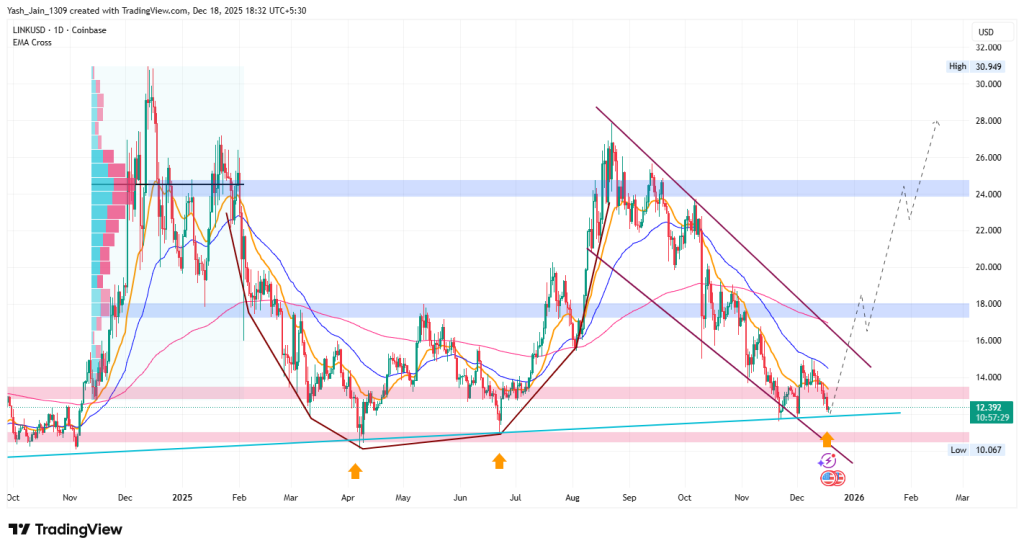
Like any investment, Chainlink via ETF isn’t risk-free. Crypto’s volatility means prices can swing wildly—LINK dropped 20% in a week last year amid market jitters. Regulatory changes could impact ETFs, and while Chainlink’s tech is solid, competition from rivals like Band Protocol exists.
On the flip side, rewards shine bright. With blockchain adoption rising, Chainlink’s role in real-world asset tokenization could drive demand. Experts forecast LINK hitting $20 by mid-2026, fueled by ETF inflows. It’s a bet on the future of decentralized data, potentially yielding high returns for patient investors.
Looking Forward: Chainlink’s Horizon in 2026 and Beyond
As 2026 unfolds, Chainlink’s ETF approval could spark a rally, drawing more developers and partnerships. Innovations like cross-chain interoperability might expand its reach, integrating with ecosystems beyond Ethereum.
Price predictions vary, but optimistic models see LINK climbing to $30 by 2030, backed by increasing DeFi volumes. For you, this means watching trends like AI-blockchain merges, where Chainlink could play a key role. Stay informed via reliable sources, and consider this ETF as part of a long-term strategy. Who knows? Your investment today might power tomorrow’s digital economy.