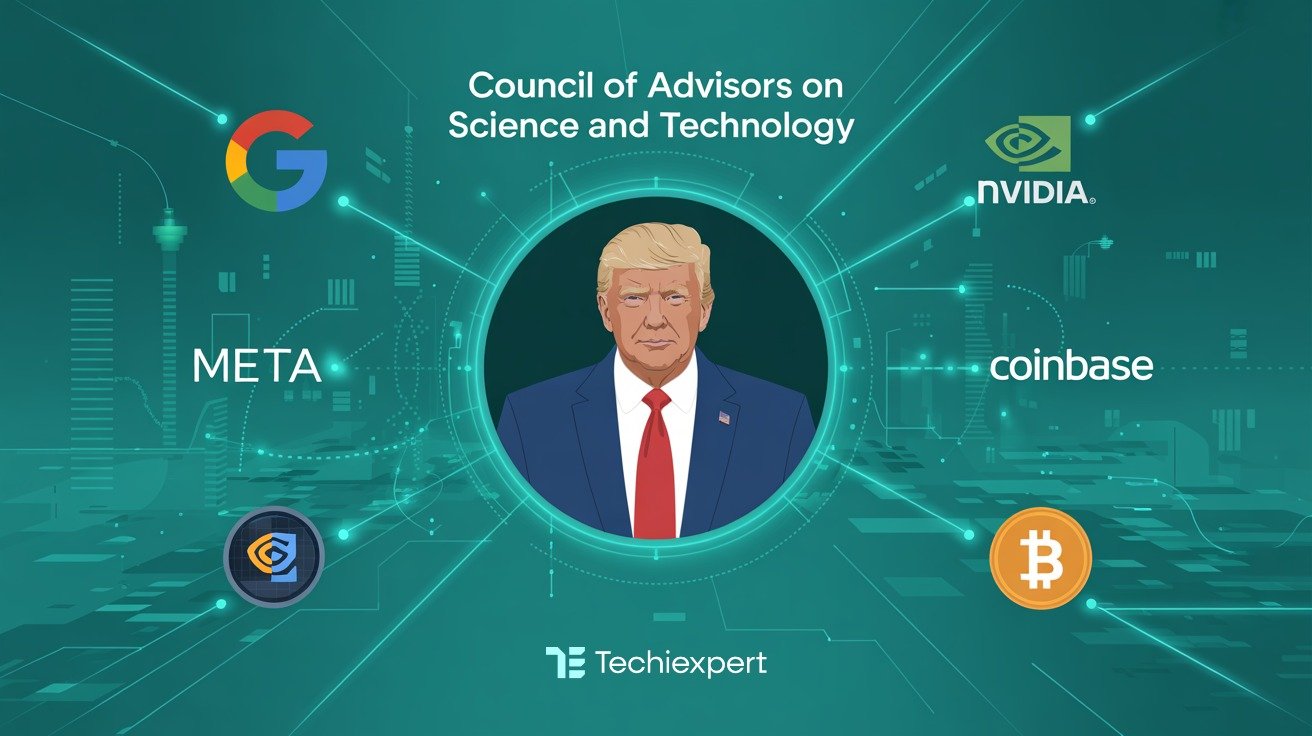
Imagine waking up in a few years to cheaper, faster banking apps powered by blockchain, AI tools that help small businesses compete globally, and American jobs booming in fields most people haven’t even heard of yet. That’s the kind of everyday promise behind President Trump’s latest move on science and tech policy. On March 25, 2026, the White House named 13 powerhouse leaders—from AI chip giants to crypto pioneers—to the President’s Council of Advisors on Science and Technology, or PCAST.
This isn’t just another advisory board. With crypto-friendly voices at the helm, PCAST is set to guide real-world policies that could unlock innovation while keeping America ahead in the global race. Let’s break it down in plain terms—no jargon, just what it means for you.

Trump Appoints 13 Tech Leaders to Tech Advisory Committee
What Exactly Is PCAST—and Why Does It Matter for Crypto and Tech?
PCAST is a high-level group of outside experts who give the president straight talk on science, tech, and innovation. Think of it as a brain trust that helps turn big ideas into practical government action, from funding research to shaping rules that affect industries.
Trump revived the council early in his term through an executive order, making it co-chaired by two key players: David Sacks, the White House’s AI and Crypto Czar, and Michael Kratsios, head of the Office of Science and Technology Policy. Their job? Advise on how emerging tech impacts jobs, the economy, and national strength—without the heavy-handed rules that slowed progress before.
For crypto fans and tech enthusiasts, this setup is huge. Sacks has already pushed for clear rules on digital assets, and now PCAST gets a direct line to the top. No more guessing games from regulators—expect smarter, pro-growth policies instead.
Meet the Appointees: Tech Titans and Crypto Voices in the Room
The first wave of members reads like a who’s who of American innovation. These aren’t career politicians; they’re builders who’ve created trillions in value and thousands of jobs.
- Fred Ehrsam, co-founder of Coinbase, brings direct crypto expertise. His presence signals that blockchain and digital assets will get serious attention.
- Jensen Huang of NVIDIA leads the charge on AI hardware, the engines powering everything from smart apps to advanced computing.
- Marc Andreessen, venture capital legend and crypto investor, knows how to spot game-changing startups.
- Heavy hitters like Mark Zuckerberg (Meta), Larry Ellison (Oracle), Sergey Brin (Google co-founder), Lisa Su (AMD), and Michael Dell round out the list, alongside nuclear fusion experts and quantum scientists.

Crypto Policy Agenda: Clarity, Innovation, and American Leadership
One big focus? Cutting through the regulatory fog that has held crypto back. Under Sacks’ influence, PCAST is expected to recommend frameworks that let blockchain thrive while protecting consumers—think straightforward rules for stablecoins, self-custody rights, and even a strategic Bitcoin reserve.
Ehrsam’s Coinbase background adds credibility here. The council could help shift from enforcement-first approaches to ones that encourage U.S. companies to lead instead of fleeing overseas. For the average person, that could mean easier access to secure digital payments, lower fees on international transfers, and new investment opportunities without the wild-west risks of the past.
No central bank digital currency (CBDC) push either—the agenda leans toward empowering individuals over government-controlled money.
AI, Chips, and Beyond: Tech Policies for Real-World Wins
On the tech side, expect emphasis on “merit-based” breakthroughs in AI, semiconductors, and fusion energy. The appointees will likely advise on removing barriers to AI development, boosting domestic chip production, and preparing the workforce for these shifts.
Picture this: Faster AI tools for doctors, teachers, and farmers. Stronger U.S. supply chains so we aren’t reliant on foreign tech. And policies that create high-paying jobs in emerging fields—without leaving everyday workers behind.
.webp)
AI and Blockchain: Transforming Data with Trust | Transfi
The council’s mandate ties directly to economic growth and national security, ensuring tech serves American families first.
How This Could Affect You: Jobs, Economy, and Daily Life
Why care if you’re not a crypto trader or AI engineer? Because these policies touch your wallet and future.
- Jobs: Tech and crypto growth could add millions of positions in software, data centers, and related fields—many accessible with training, not just elite degrees.
- Economy: Clear rules mean more investment, lower costs for businesses, and innovation that trickles down to consumers (think affordable smart devices or efficient energy).
- Innovation Edge: By focusing on results over ideology, PCAST aims for practical wins—like AI that boosts productivity without the over-regulation seen elsewhere.
It’s about building a “Golden Age of American Innovation,” as the White House puts it, where ordinary people benefit from breakthroughs in finance, healthcare, and energy.
The Road Ahead: A Fresh Approach to Tech Leadership
With more members possibly joining soon, PCAST is poised to deliver actionable recommendations fast. Backed by leaders who have skin in the game, the agenda prioritizes speed, clarity, and competitiveness.
This isn’t politics as usual—it’s a practical push to make America the undisputed hub for crypto and tech. Whether you’re curious about Bitcoin, excited by AI, or just want a stronger economy, these appointees could deliver changes that matter in your daily life.
Stay tuned: The decisions made here could define the next decade of digital progress. What do you think—exciting times ahead?