It’s 2 a.m. in Chicago on a quiet post-Thanksgiving Friday in 2025, and the servers that power trillions in daily trades start humming too hot. Alarms blare, chillers fail, and in an instant, the digital heartbeat of global finance flatlines — not from hackers or a market crash, but from a simple, sweaty breakdown in the cooling pipes. By dawn, over $2 trillion in crypto-linked futures are frozen, traders are glued to their screens in Kuala Lumpur and Tokyo, and the world gets a stark reminder: even the mightiest exchanges run on hardware that can overheat like a laptop during a Zoom call.
This wasn’t a cyber thriller. It was physics winning a round against finance.
The Timeline: From Chill to Chaos in Hours
The outage kicked off around 03:00 GMT on November 28 (that’s 9:00 p.m. ET on the 27th for U.S. folks), when CME Group’s Globex platform — the electronic backbone handling 90% of its trades — suddenly went dark. Futures for everything from S&P 500 stocks to West Texas crude oil stopped updating. Prices froze mid-tick, orders vanished into the ether, and even the EBS foreign exchange platform, which moves billions in euro-dollar swaps daily, joined the blackout.
By 07:20 GMT, gold quotes were stuck at yesterday’s close, Nasdaq 100 futures hadn’t budged in four hours, and palm oil contracts in Malaysia were essentially blind. The halt rippled across Asia’s thin post-holiday liquidity, where volumes are already low — think of it as the market’s night shift getting caught with its pants down.
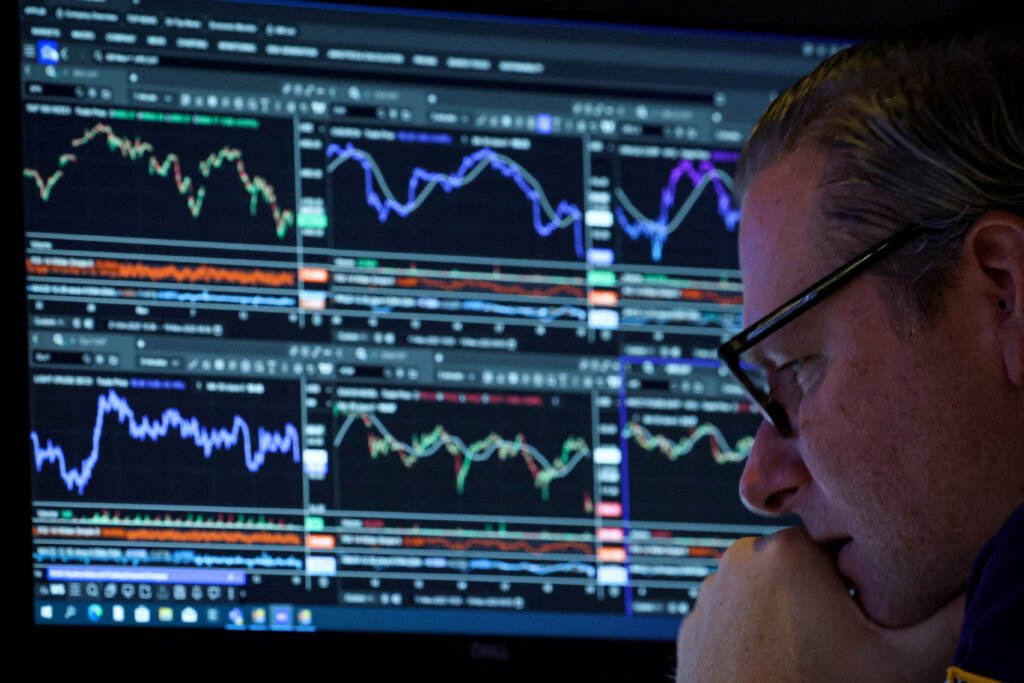
Full restoration trickled in by 13:00 GMT (8:00 a.m. ET), starting with forex and rolling out to equities and commodities. But for nearly 10 hours, the world’s largest derivatives exchange was offline — its longest glitch since a 2014 ag-contract fiasco that forced traders back to the trading floor with pencils and notepads.
The Culprit: A Cooling Breakdown at CyrusOne’s Chicago Hub
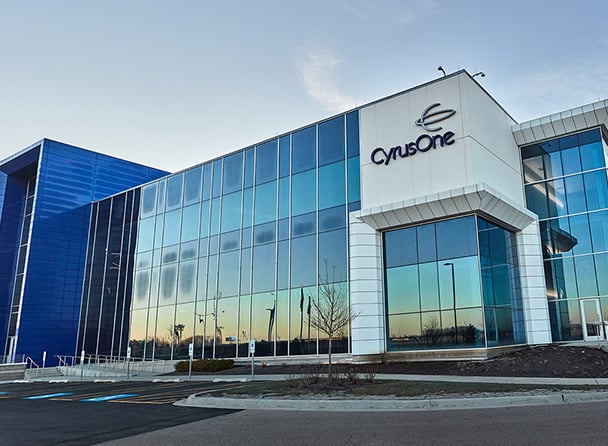
At the heart of it? A chiller plant failure at CyrusOne’s CHI1 data center in the Chicago suburbs, where CME houses much of its server muscle. Data centers like this aren’t just big rooms full of blinking lights — they’re climate-controlled fortresses guzzling enough electricity to power small cities, all to keep thousands of servers from melting under the heat of constant computations.
When the cooling units crapped out, temperatures spiked, triggering automatic shutdowns to save the hardware from frying. CyrusOne, a Dallas-based giant with over 55 global facilities, confirmed the issue hit multiple chillers. They scrambled with temporary cooling rigs — think industrial fans on steroids — while CME’s engineers verified no data corruption had snuck in during the freeze.
“The cooling system failure at the CyrusOne data center is a rare occurrence but has significant implications for futures price discovery for cryptocurrencies like BTC, ETH, and SOL.” — FX News Group Report, November 29, 2025
It’s a humbling glitch: CME, valued at $80 billion and clearing 26.3 million contracts daily in October 2025 alone, outsourced its cooling to a third-party lease from 2016. When the pipes burst (metaphorically), they were at the mercy of someone else’s fix-it crew.
The $2 Trillion Freeze: How Crypto Got Caught in the Crossfire
CME isn’t just beans and pork bellies anymore — it’s a crypto heavyweight too. The exchange’s Bitcoin and Ethereum futures, launched in 2017 and 2018, boast over $2 trillion in open interest as of late 2025, per LSEG data. That’s the notional value of bets riding on BTC topping $100K or ETH’s Pectra upgrade sparking a rally.
When Globex halted, those contracts went stale. Bitcoin futures stopped ticking, causing brief price dislocations — BTC dipped 1.2% on spot markets before rebounding as traders fled to Binance and Coinbase for liquidity. Ethereum micros, up 583% in volume year-over-year, saw similar stutters, with some institutions de-risking positions in a panic.
The irony? This hit right after crypto’s banner October, where CME’s digital asset volumes exploded 226%. Spot crypto kept chugging on decentralized exchanges, untouched by TradFi’s AC woes — a subtle flex for blockchain’s “always-on” promise.
Traders vented on X: “CME down because servers got sweaty? Meanwhile, Solana’s been humming 24/7 without a coffee break,” quipped one user. Silver prices even spiked to $54/oz in the chaos, fueling wild theories of manipulation (spoiler: it was just thin liquidity amplifying noise).
Why This Matters: A Wake-Up Call for Overheated Markets
Outages like this aren’t daily drama, but they’re not ancient history either — remember the 2019 CME three-hour glitch that zapped grains and metals? Or Knight Capital’s 2012 algo meltdown that cost $440 million in 45 minutes? Each one peels back the curtain on how fragile our hyper-connected finance is.
In 2025, with AI workloads gobbling 4% of U.S. electricity (projected to double by 2030, per the IEA), data centers are the new fault lines. CME’s planning a full Google Cloud migration by 2029, but until then, single-site failures like CHI1 expose the risks of eggs-in-one-basket infrastructure.
For everyday investors: If you’re trading CME-linked ETFs or using futures for hedges, this is your cue to diversify venues. Crypto holders? It underscores why DEXs like Uniswap didn’t blink — no central chiller, no single point of sweat.
“U.S. data centers consumed 183 terawatt-hours in 2024… By 2030, this doubles to 426 terawatt-hours. AI workloads growing at 30% annually. Every watt becomes heat.” — Shanaka Anslem Perera on X, November 28, 2025
The Aftermath: Quick Rebound, Lingering Questions
Markets bounced back with a shrug — S&P futures up 0.3%, BTC steady at $98K — thanks to the holiday lull. No major losses reported, no lawsuits filed (yet). CME pledged a post-mortem review, and CyrusOne’s back to full chill.
But whispers linger: Was it really just a chiller, or a sign of deeper strain from record volumes? Traders in Asia griped about “nightmare” execution risks, and analysts like B. Riley’s Art Hogan called it a dodged bullet: “Fortunate it hit on a slow day — could’ve been apocalypse-now bad.”
Final Thoughts: When Heat Wins, Innovation Cools Off
The CME halt wasn’t a crash; it was a cooldown. A $2 trillion pause button pressed by overheating silicon, reminding us that behind every ticker is a whirring box fighting entropy. As crypto bridges TradFi, events like this highlight the edge of decentralized tech: no fans to fail, no one facility to falter.
Next time your trade freezes, blame the thermostat — not the tape. And maybe keep an eye on those server farms; they’re the unsung heroes (and occasional villains) of our money machine.
For live updates: CME Status Page – https://www.cmegroup.com/tools-information/service-status.html Crypto Futures Data: https://www.cmegroup.com/markets/cryptocurrencies.html
Stay cool out there. 🌡️