Bitcoin ATMs have become a popular way for everyday people to buy or sell Bitcoin using cash, offering quick access without needing a bank account or complex online setup. But one key detail often catches users off guard: transaction limits aren’t the same everywhere. In 2026, these caps vary widely by country due to local anti-money laundering rules, fraud prevention efforts, and operator policies. Knowing the limits helps you plan transactions, avoid surprises at the machine, and stay compliant.
This guide explains practical ways to check Bitcoin ATM limits by country, why they differ, and tips for smooth use—written for beginners who want clear, actionable info.
Why Bitcoin ATM Limits Vary So Much by Country
Limits on how much cash you can insert to buy Bitcoin (or withdraw from selling) come from a mix of factors. Governments set rules to fight scams and illicit use, while operators add their own tiers based on verification.
In many places, small amounts need little or no ID, but larger sums trigger full KYC (Know Your Customer) checks like scanning your passport or driver’s license. Some countries enforce strict national caps, others leave it to states or provinces.
For example, fraud concerns led to tighter rules in parts of the U.S., where certain states cap new users at low amounts like $1,000–$2,000 per day (Coin ATM Radar data and state legislation reports, 2025–2026). In contrast, places with lighter oversight allow higher tiers up to $10,000 or more after verification.
These changes evolve quickly—regulations tightened in 2025 in response to rising scams, and 2026 continues that trend with more ID requirements even for smaller trades at major operators.

Bitcoin ATM ID Requirements: What You Need to Know (2025)
The Best Ways to Check Current Bitcoin ATM Limits by Country
The easiest and most reliable method starts with trusted directories that list real-time details from operators worldwide.
CoinATMRadar.com stands out as the go-to resource. This site tracks over 38,000 machines across 80+ countries (as reported in industry updates from early 2026). Here’s how to use it:
- Go to the main map or “Countries” section.
- Select your country to see a list of operators and machines.
- Click individual listings—many show buy/sell fees, daily/weekly limits, and KYC rules right there.
Some machines display “online rates” including transaction caps. If a specific ATM doesn’t list limits, contact the operator via the site.
Other good options include operator websites like CoinFlip, Bitcoin Depot, or General Bytes, which post their country-specific policies. Cross-check multiple sources since limits can change based on local laws or updates.
For official insights, check government regulator sites (e.g., FinCEN in the U.S. or BaFin in Germany) for AML guidelines that influence caps—though they rarely list exact numbers per machine.

Typical Bitcoin ATM Limits in Major Countries (2026 Overview)
While always verify on-site or via directories (as limits shift), here are common ranges based on recent reports and operator data:
- United States: Daily limits often range from $3,000–$10,000 after ID verification, but states like California enforce $1,000 caps, while others allow up to $25,000 for verified users. Many operators now require ID for every transaction (Bitcoin Depot policy update, February 2026).
- Canada: Similar to the U.S., typically $3,000–$10,000 CAD daily, with higher tiers needing ID.
- Germany: €1,000–€10,000 equivalent, under strict BaFin oversight and full KYC for larger amounts.
- Australia: Around AUD 4,000–8,000 daily, with verified ID required; some national rules cap cash transactions.
- France and Spain: Often €1,000–€10,000 equivalent (or USD match), with ID checks scaling up.
- Other regions: In places like Poland or Romania, limits vary by operator but often align with EU trends under MiCA regulations.
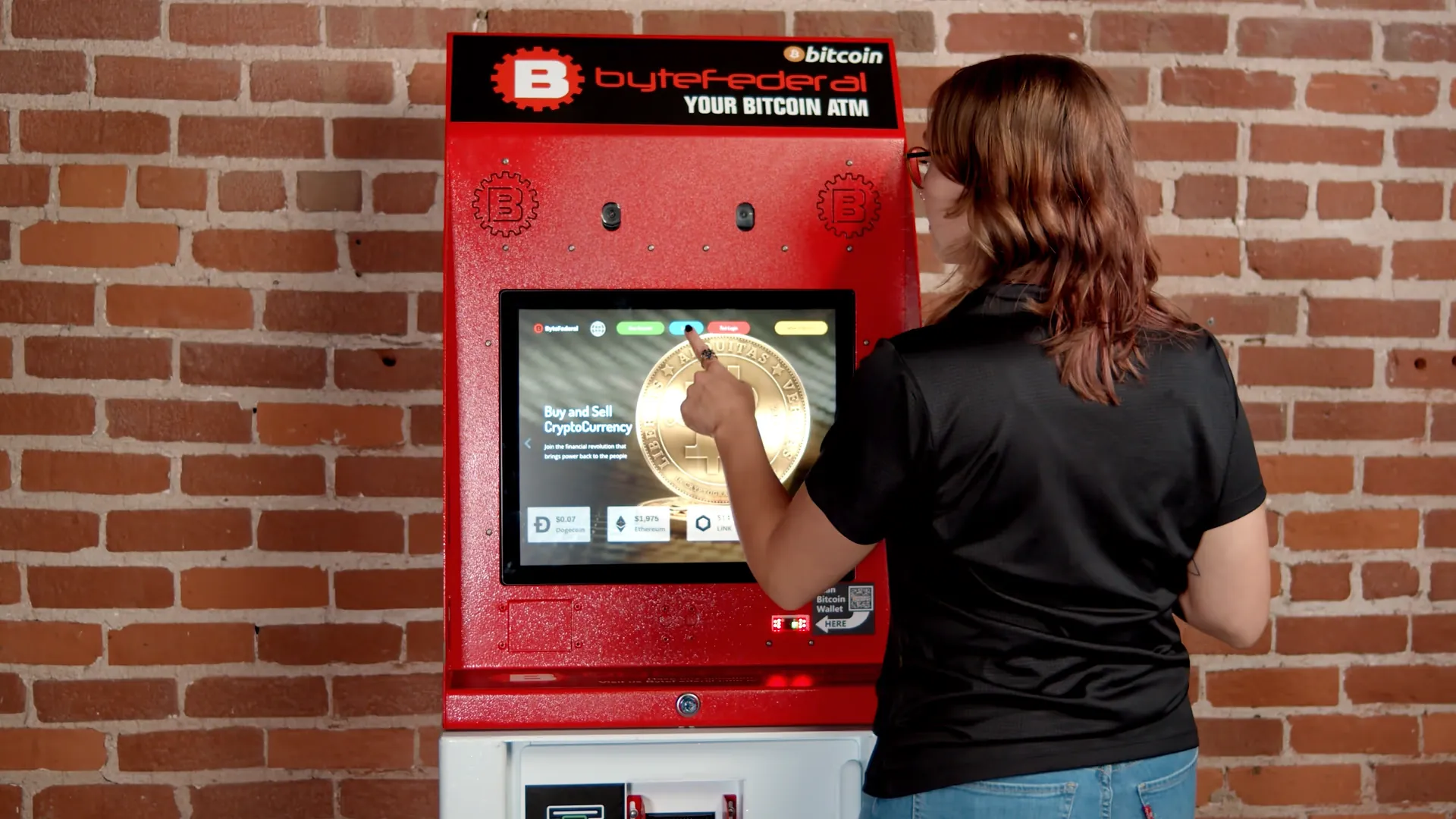
How to use a Bitcoin ATM for the First Time | Byte Federal
These are averages; your local machine might differ based on the brand (e.g., General Bytes vs. BitAccess) or recent regulatory tweaks.
Tips for Handling Limits and Avoiding Issues
- Start small: Test with a low amount (often $20–$100 minimum) to see the process and confirm limits.
- Bring ID: Many machines now scan phones or documents even for mid-range trades—have your government-issued ID ready.
- Check fees too: Limits tie into high fees (8–15% common), so compare machines on directories.
- Watch for updates: Regulations evolve fast—re-check CoinATMRadar before heading out, especially if traveling.
- Consider alternatives: For bigger amounts, online exchanges often have higher limits with proper verification.
By using tools like CoinATMRadar and understanding local rules, you can use Bitcoin ATMs confidently without hitting unexpected walls. Whether you’re new to crypto or just need quick cash-to-Bitcoin access, staying informed makes the experience smoother and safer.