Imagine sending money across borders in seconds, with lower fees and more transparency, without the usual headaches of traditional banking wires. That’s the promise of stablecoins, and Visa is making it more practical than ever. On April 29, 2026, the payments giant announced a major expansion of its stablecoin settlement pilot, adding five new blockchains to create more options for banks, fintech companies, and businesses worldwide.
This move isn’t just technical tinkering—it’s a clear signal that stablecoins are shifting from experimental tools to everyday infrastructure in global finance.
What Stablecoins Are and Why They Matter
Stablecoins are digital currencies designed to hold a steady value, usually pegged to the US dollar. Think of them like digital versions of cash that live on blockchains. Unlike volatile cryptocurrencies such as Bitcoin, they aim for stability, making them useful for payments, remittances, and business settlements.
For everyday people, this could mean faster international transfers for families sending money home or businesses paying suppliers without waiting days for funds to clear. Visa’s involvement brings the trust and scale of a familiar name to this emerging technology.
[Suggested Image: Infographic comparing traditional bank wire transfers vs. stablecoin settlements on blockchain – speed, cost, and transparency. Place here for visual appeal.]
The Big Expansion: Five New Blockchains Join the Network
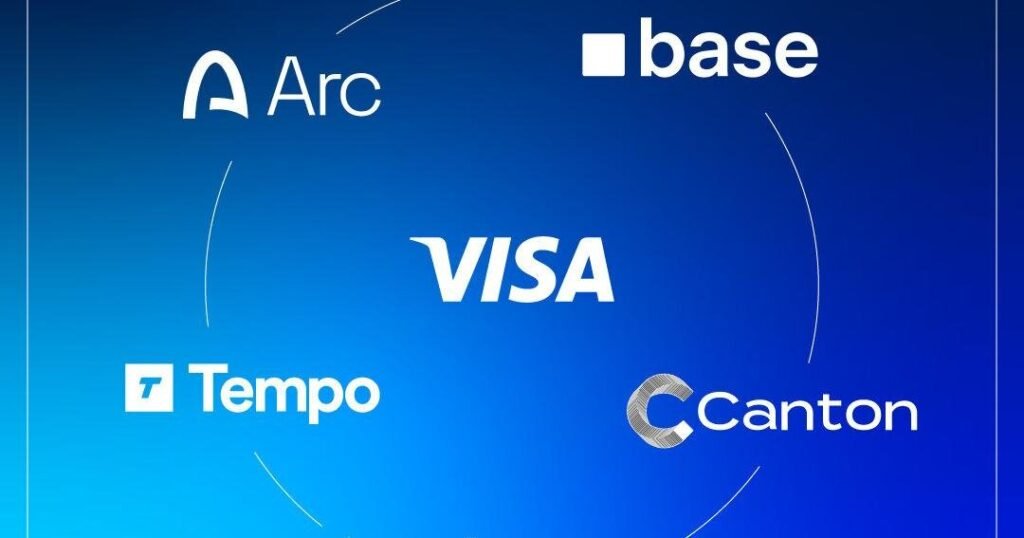
Visa already supported four blockchains: Avalanche, Ethereum, Solana, and Stellar. Now, it’s adding Arc, Base, Canton, Polygon, and Tempo, bringing the total to nine.
Here’s a quick look at the newcomers:
- Arc (from Circle): Built to connect programmable money with real-world business needs.
- Base (from Coinbase): Focuses on fast, low-cost transactions and even “agentic commerce” (think automated, AI-driven payments).
- Canton: Designed with privacy features for regulated institutions and big financial players.
- Polygon: Known for handling high volumes of transactions efficiently and affordably.
- Tempo: Emphasizes fast, private movement of funds.
This multi-chain approach gives partners flexibility. They can pick the network that best fits their needs—whether it’s speed, cost, privacy, or compliance—while Visa handles the common settlement layer behind the scenes.
[Suggested Image: Simple chart or icons showing the 9 blockchains (existing + new 5) with key strengths like “Low Cost” or “High Privacy.” Insert after this section.]
Impressive Growth Numbers Backing the Move
The timing isn’t random. Visa’s stablecoin settlement pilot has hit a $7 billion annualized run rate, jumping 50% from the previous quarter. This shows real momentum, with actual usage growing quickly among financial institutions and payment providers.
The company has already rolled out pilots across Latin America, Europe, Asia-Pacific, and other regions. It supports USDC settlements for U.S. banks and powers over 130 stablecoin-linked card programs in more than 50 countries.
Why This Matters for Ordinary People and Businesses
You might not notice blockchains in your daily life yet, but this expansion could lead to:
- Cheaper remittances: Families abroad could receive money faster and with lower fees.
- Smoother business payments: Companies could settle invoices almost instantly.
- Better global commerce: More seamless integration between traditional cards and digital wallets.
Rubail Birwadker, Global Head of Growth Products and Strategic Partnerships at Visa, explained it well: Partners operate in a multi-chain world, and they want options that match that reality. Visa aims to simplify the complexity while keeping things reliable.
Leaders from the new blockchain partners echo this excitement, highlighting how the integration supports everything from instant global payments to programmable finance.
[Suggested Image: Real-world use case illustration – e.g., a person sending money internationally via phone with stablecoin vs. old wire transfer. Add here to engage readers.]
Bridging Traditional Finance and the Future
Visa isn’t abandoning its roots. Instead, it’s building bridges. By adding these blockchains, the company is helping make blockchain infrastructure a practical complement to existing payment systems—offering the same reliability, security, and scale people expect from Visa.
Experts see this as part of a broader trend where stablecoins gain traction for real-world use. As liquidity spreads across different networks, infrastructure like Visa’s helps connect the dots without forcing everyone onto a single chain.
Looking Ahead
This expansion positions Visa at the forefront of digital payments evolution. While challenges like regulation and interoperability remain, the growing volume and broader support suggest stablecoins are here to stay and integrate deeper into mainstream finance.
For the average person, it points toward a future where money moves as easily as information does today—quickly, affordably, and across borders. Visa’s latest step makes that future feel a bit closer.
Sources include official Visa announcements and reports from April 29-30, 2026.