

Picture this: A busy CFO opens a single dashboard on their laptop and sees the company’s cash balances sitting right next to XRP and a stablecoin like RLUSD — all updated in real time, with no extra apps, no manual spreadsheets, and no separate crypto wallets to juggle. That scenario just became real thanks to a major move by Ripple.
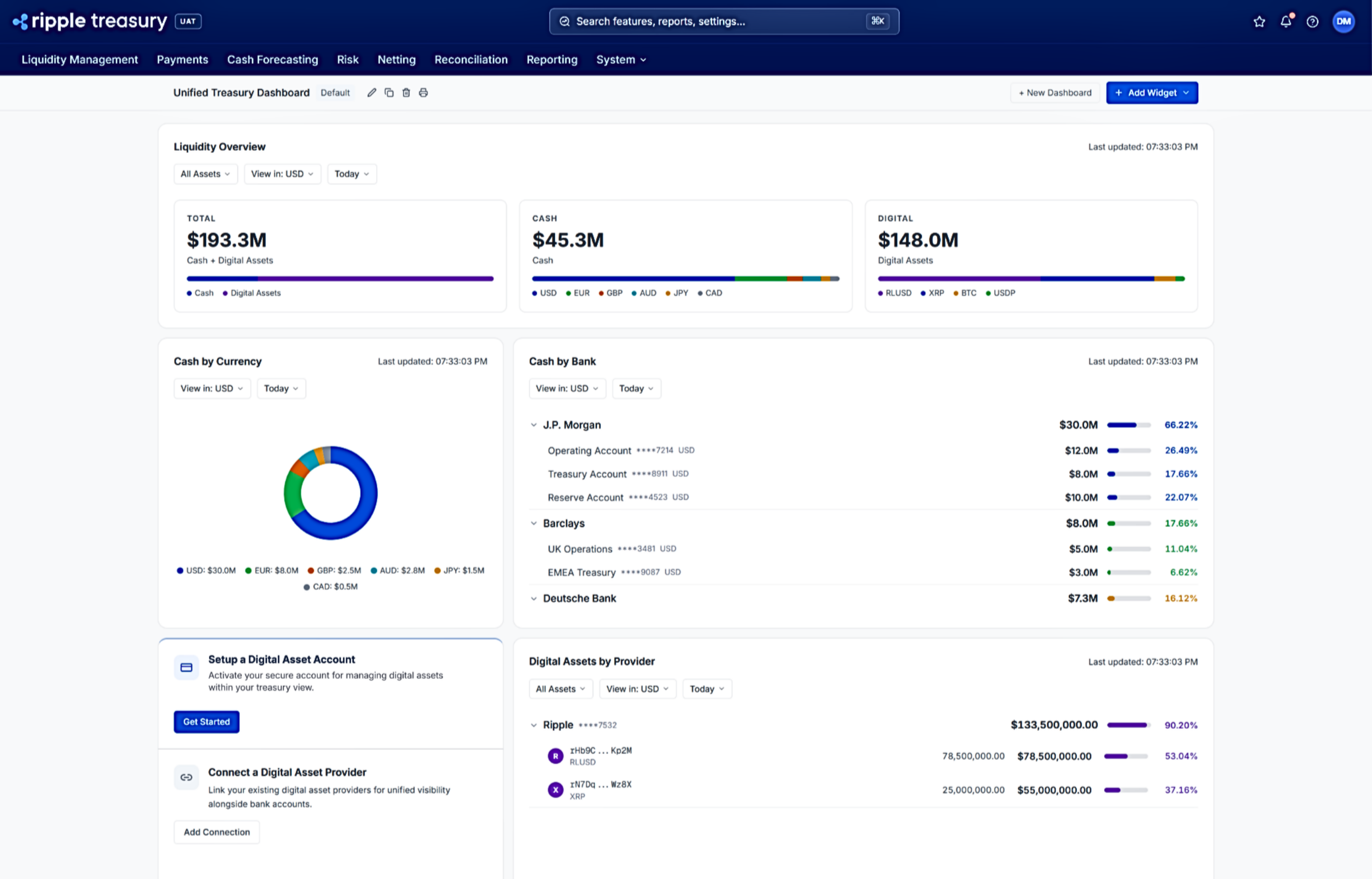
Corporate Treasury Has a New Starting Point for Digital Assets | Ripple
Ripple has quietly built one of the biggest bridges yet between traditional corporate finance and the crypto world. By adding native support for XRP and its own RLUSD stablecoin into a treasury system that already handled $13 trillion in payments last year, the company is making it simple for businesses to treat digital assets like ordinary cash. This isn’t hype — it’s practical infrastructure that could change how companies manage money every day.
The $13 Trillion Foundation: Ripple’s Hidden Giant
Ripple didn’t start from scratch. In 2025, it acquired GTreasury — a trusted name in corporate treasury software with over 40 years of experience. That platform already powered payments for everyone from small businesses to Fortune 500 companies, moving an astonishing $13 trillion in volume throughout 2025. Before this update, every single dollar flowed the old-fashioned way — pure fiat, zero crypto.
Now, Ripple Treasury (the rebranded platform) is flipping the script. The $13 trillion scale gives it instant credibility with big companies that already trust the system for payroll, supplier payments, and cash forecasting. Think of it like upgrading a reliable old pickup truck with a high-tech electric engine — same vehicle, but now it runs on tomorrow’s fuel.
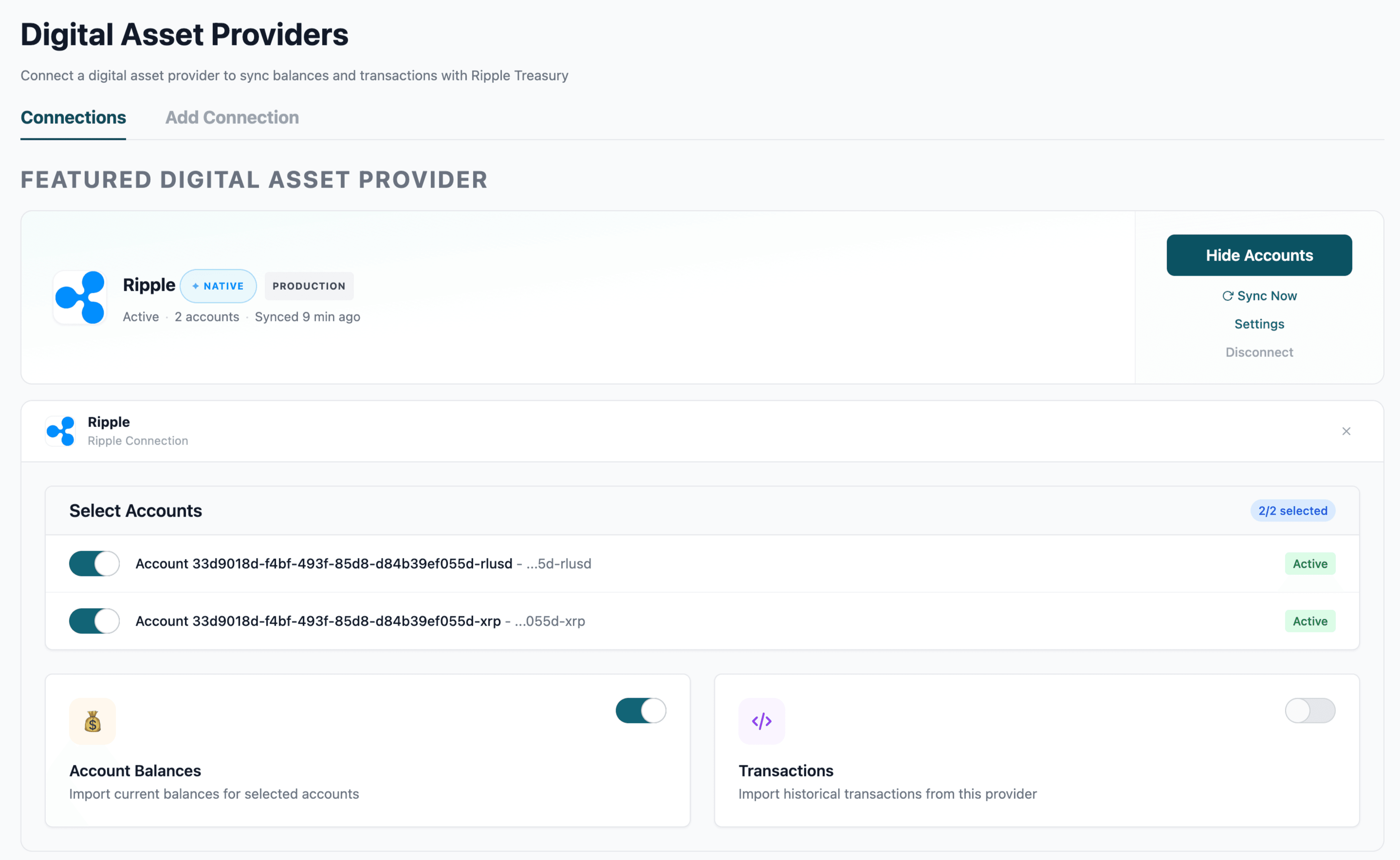
Corporate Treasury Has a New Starting Point for Digital Assets | Ripple
What Exactly Is the New XRP and Stablecoin Integration?
Ripple launched two key features on April 1, 2026: Digital Asset Accounts and Unified Treasury. Together, they let treasury teams hold, view, and manage XRP, RLUSD, and other digital assets right alongside regular bank balances — all in one familiar dashboard.
Here’s how it works in plain English:
- Digital Asset Accounts: You create a secure account inside Ripple Treasury. XRP and RLUSD show up exactly like cash. Every transaction gets recorded automatically with the exact native amount (down to 15 decimal places for precision), the U.S. dollar equivalent using live exchange rates, and a full audit trail.
- Unified Treasury: This pulls in balances from external crypto providers via simple API connections. No need for separate logins or third-party custodians. Everything syncs in seconds.
CFOs no longer have to switch between banking software and crypto exchanges. It’s all there, behaving just like cash. As one Ripple executive put it, “Treasury teams shouldn’t have to think about whether a balance is on-chain or in a bank account — they should simply see their position.”
Why XRP and RLUSD? Simple Benefits for Real Businesses
XRP is Ripple’s fast, low-cost digital asset designed for moving money across borders quickly. RLUSD is Ripple’s own stablecoin — backed one-to-one by U.S. dollars, cash equivalents, and short-term Treasuries — so it stays pegged at $1 and feels as stable as a regular dollar in your account.
Ripple Launches Digital Asset Accounts as XRP and RLUSD Enter Core Corporate Treasury Workflows – Featured Bitcoin News
For ordinary companies, this integration means:
- Faster cross-border payments: Send money overseas in seconds instead of days, with lower fees.
- Better cash management: Hold idle funds in RLUSD to earn yield or use XRP for instant liquidity when needed.
- Easier compliance and reporting: Everything is automatically tracked with the same precision as traditional banking — a huge win for auditors and regulators.
- Reduced risk: No more manual transfers or reconciliation headaches that can lead to errors or lost funds.
A recent survey of over 1,000 global finance leaders found that 72% believe they must offer digital asset solutions to stay competitive. Yet most still struggle with integration. Ripple just solved that puzzle for them.
How This Changes the Game for Crypto Adoption
Stablecoins already moved $33 trillion in volume last year — up 72% from the year before — but only a tiny slice went toward everyday business uses like payroll or supplier bills. Ripple’s move changes that by plugging crypto directly into the systems CFOs already use.
This isn’t just about Ripple winning. It’s about making blockchain practical for the people who move the world’s money. Businesses can now experiment with digital assets without overhauling their entire operation. That lowers the barrier dramatically and could spark a wave of real-world adoption.
For crypto enthusiasts, it means XRP and RLUSD gain genuine utility inside corporate balance sheets — not just on exchanges. Even a small slice of that $13 trillion starting to flow through crypto rails could create meaningful demand.
What Comes Next for Ripple Treasury?
This launch is just the beginning. Ripple plans to roll out more tools soon, including easier cross-border and intercompany settlements, plus ways to earn overnight yield on idle cash using stablecoins and digital assets. The goal? Turn treasury desks into 24/7 powerhouses that work as smoothly as consumer banking apps.
Availability varies by region for now, but global rollout is underway with several customers already testing it in beta.
The Bottom Line: Crypto Finally Feels Like Regular Money
Ripple’s $13 trillion treasury platform just made digital assets feel less like a futuristic experiment and more like a practical business tool. By weaving XRP and RLUSD seamlessly into corporate workflows, the company is helping bridge the gap between traditional finance and blockchain in a way that’s actually useful for everyday companies.
Whether you’re a small business owner curious about faster payments or an investor watching crypto’s real-world impact, this development signals something bigger: the moment when crypto stops being “separate” and starts becoming part of how the world runs its money. The treasury desk just got a whole lot more interesting — and a lot more connected.