It’s late November 2025, and Do Kwon—the once-celebrated wunderkind of crypto who built a $40 billion empire—sits in a Manhattan courtroom, not fighting charges, but quietly pleading for mercy. After years on the run, a dramatic arrest in Montenegro, and a surprise guilty plea, he’s now asking a U.S. judge for just five years behind bars. Why the U.S.? Why so short? And why now, with South Korea’s prosecutors circling like hawks, demanding up to 40 years back home? This isn’t just a legal chess game; it’s a desperate bid to rewrite Kwon’s future in a system he believes might cut him some slack. For anyone who’s ever lost sleep over a bad investment or wondered how the mighty fall, this story unpacks the high-stakes gamble at the heart of crypto’s biggest reckoning.
The Terra Crash: From Crypto Darling to $40 Billion Nightmare
To understand Kwon’s courtroom beg, rewind to May 2022. Do Kwon wasn’t just another founder—he was the brash visionary behind Terra, a blockchain promising “stable” money through an algorithmic stablecoin called UST, backed by its sister token LUNA. It was the DeFi dream: No banks, no borders, yields that made traditional finance look sleepy. At its peak, Terra held sway over $40 billion in market value, with everyday folks worldwide staking their savings for 20% returns.
Then, it imploded. A death spiral—triggered by market jitters and a failed defense from sister project Anchor—saw UST lose its $1 peg, dragging LUNA from $80 to pennies in days. Billions evaporated overnight: Retirees in Asia, young traders in the U.S., families betting their futures. The U.S. Department of Justice later charged Kwon with wire fraud and conspiracy, alleging he hyped Terra’s stability while hiding risks, like secret interventions by trading firms to prop up the peg. A Bloomberg analysis pegged investor losses at $40 billion, rivaling the FTX meltdown but with even wider ripples across global markets.
Kwon fled, sparking a 2.5-year manhunt that turned him into crypto’s most wanted. But by 2025, the tables turned—and his strategy shifted from defiance to deal-making.
The Global Tug-of-War: Extradition Drama and the Montenegro Pit Stop
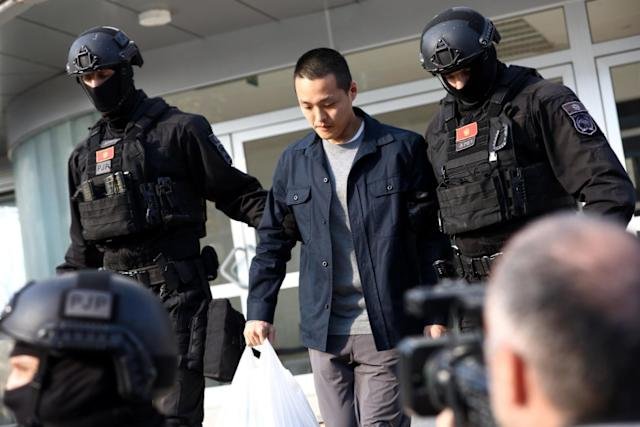
Kwon didn’t vanish quietly. After the crash, he bounced between countries, posting cryptic tweets that taunted regulators. South Korea issued an arrest warrant first, charging him under capital markets laws for misleading investors. But it was Montenegro, in March 2023, that finally caged him—busted at Podgorica airport with a fake Costa Rican passport, alongside CFO Han Chang-joon.
What followed was extradition roulette. Both the U.S. and South Korea vied for custody, citing the same fraud. Montenegro’s courts ping-ponged: First approving U.S. extradition in December 2023, then flipping to South Korea in February 2024 amid appeals. Kwon spent nearly three years in a grim Montenegrin jail—harsh conditions by his lawyers’ account, with limited access to sunlight and family—before the European Court of Human Rights weighed in, greenlighting U.S. transfer in July 2025.
Why the U.S. win? American prosecutors argued their case was airtight, backed by SEC civil suits alleging Terraform’s 92% ownership by Kwon funneled fraud proceeds. South Korea, meanwhile, faced delays from Kwon’s appeals. For Kwon, landing in Brooklyn’s Metropolitan Detention Center wasn’t ideal, but it beat Seoul’s maximum-security facilities—where overcrowding and isolation are notorious, per Human Rights Watch reports on Asian prisons.
The Plea Deal Pivot: Guilty in August, Begging in November
Fast-forward to August 2025: Kwon, facing a trial that could drag into 2026, flipped the script. In a Manhattan hearing, he pleaded guilty to two counts—conspiracy to defraud and wire fraud—waiving his jury trial rights. “What I did was wrong,” he told Judge Paul Engelmayer, voice steady but eyes downcast, apologizing for “false and misleading statements” about Terra’s mechanics. The deal? Prosecutors capped their ask at 12 years max, plus $19 million in forfeitures and properties like a $2 million Manhattan pad.
But Kwon’s team didn’t stop there. In a November 26 filing, they pushed for just five years, arguing anything more is “far greater than necessary.” Why? Time served (nearly three years, counting Montenegro), remorse shown, and massive restitution already pledged. Federal guidelines for $40 billion fraud could mean life, but the plea slashed that to 25 years statutory max—yet Kwon’s lawyers leaned on precedents like Bernie Madoff’s 150-year slap (for sheer scale) versus lighter white-collar deals in crypto, like FTX’s Caroline Ellison’s 2-year probation nod.
Sentencing looms December 11. If granted, Kwon could serve half in the U.S. before transfer—per a U.S.-South Korea treaty allowing concurrent jurisdiction without double jeopardy blocks.
U.S. vs. Korea: Why Five Years Here Beats 40 There
Here’s the raw math driving Kwon’s plea: In the U.S., federal sentencing weighs loss amount heavily, but judges factor cooperation (Kwon spilled on Terraform ops) and rehab potential. A five-year bid aligns with mid-tier fraud cases—think 3-7 years for $100M+ schemes—per U.S. Sentencing Commission data showing 68% of white-collar offenders get under 5 years post-plea.
South Korea? Prosecutors want 40 years, stacking charges like market manipulation and fiduciary breaches under the 2021 Capital Markets Act—harsher for locals, with 20-40 year norms for mega-frauds. Prisons there emphasize “reflective solitude,” with reports of 23-hour lockdowns and mental health strains, versus U.S. facilities’ (flawed but) more progressive programs like education credits reducing time served.
Kwon knows the optics: Serve light in America, then negotiate from strength in Seoul—or appeal extradition post-sentence. As one X user quipped amid the buzz, “SBF got 25 for less damage—Do’s playing 4D chess.” Crypto Twitter echoes this: Investors who lost life savings push for U.S. leniency? No—many rage at the disparity, but Kwon’s calculus is personal survival.
| Factor | U.S. Sentence (Plea Cap) | South Korea Demand |
|---|---|---|
| Max Years | 12 (prosecutors) / 5 (Kwon ask) | Up to 40 |
| Key Charges | Wire fraud, conspiracy | Market manipulation, breach of trust |
| Time Already Served | Counts toward total (~3 years) | Starts fresh post-transfer |
| Prison Conditions | Varied; rehab programs | Strict isolation focus |
| Post-Sentence Fate | Possible Korea transfer after half | Full term in Seoul |
The Bigger Ripple: Justice, Crypto, and Lessons for Founders
Kwon’s beg isn’t isolated—it’s crypto’s 2025 wake-up. Post-FTX, regulators worldwide tightened: U.S. SEC suits ballooned 300%, Korea’s FIU fined exchanges $50M+ for lapses. For founders, it’s a blueprint: Plead early, leverage dual jurisdictions, but own the wreckage. Victims? The $40B scar lingers—class actions netted $4.5B in SEC settlements, but many retail holders got pennies.
As December 11 nears, Kwon’s fate could sway markets: A light sentence might embolden innovators; a heavy one, chill them. Either way, it’s a reminder— in crypto’s wild ride, the house (regulators) always collects. For everyday holders, diversify, DYOR, and remember: No empire’s too big to tumble.
What do you think—fair play or too soft? The gavel drops soon.