Imagine turning a slice of your retirement savings into a digital token that zips through global markets faster than a coffee run—secure, transparent, and open to anyone with a smartphone. That’s not sci-fi; it’s the reality unfolding in finance today, thanks to a bold move by banking giant UBS and blockchain wizard Chainlink. In a world where traditional investments often feel like waiting in line at the DMV, this partnership is flipping the script, unlocking a $6 trillion opportunity in tokenized assets that could democratize wealth-building for everyday folks like you and me.

Unpacking Asset Tokenization: The Bridge Between Old-School Finance and Digital Speed
Asset tokenization might sound like tech jargon reserved for Silicon Valley whiz kids, but it’s simpler than it seems. At its core, it’s about chopping up real-world assets—like stocks, bonds, or even real estate—into digital tokens on a blockchain. Think of it as slicing a pizza into shareable pieces that anyone can trade instantly, without needing a middleman to cut the deal.
This isn’t just a buzzword; it’s a revolution brewing in the $100 trillion global fund industry. By 2030, experts predict tokenized assets could hit $16 trillion, blending the stability of traditional finance with blockchain’s lightning-fast efficiency. For regular investors, that means lower fees, round-the-clock access, and a front-row seat to how your money moves—no more black-box statements from your broker.
Why Tokenization Feels Like Magic for Your Wallet
Picture this: Instead of paperwork piles for buying into a mutual fund, you scan a QR code and own a fraction of it in seconds. Tokenization automates the boring bits—settlement, verification, even dividend payouts—using smart contracts that run like unbreakable digital promises. It’s like upgrading from a flip phone to a smartphone: everything’s connected, and life’s a bit easier.
The UBS-Chainlink Power Duo: Pioneering the $6 Trillion Frontier
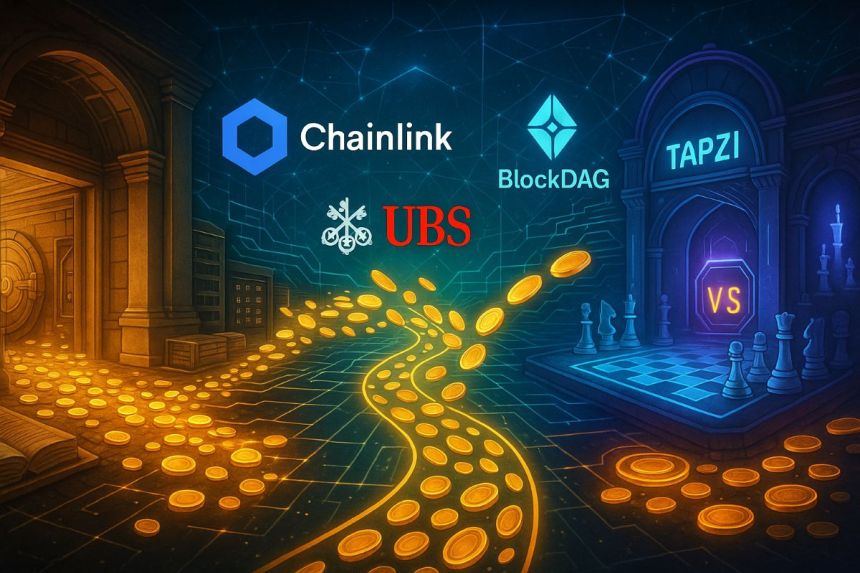
Swiss powerhouse UBS, managing a staggering $6 trillion in assets, isn’t content with the status quo. Teaming up with Chainlink, the go-to oracle for secure blockchain data, they’ve just pulled off something historic: the world’s first fully live, end-to-end tokenized fund transaction. This isn’t a lab experiment—it’s real money flowing through Ethereum’s blockchain, proving that big banks can dance with crypto without stepping on toes.
Inside the First Live Deal: A Peek Under the Hood
At the heart of this breakthrough is Chainlink’s Digital Transfer Agent (DTA), a clever tool that syncs old-school bank systems with blockchain’s digital ledger. In their demo, UBS tokenized its USD Money Market Investment Fund (uMINT) and handled a subscription and redemption on-chain, all in production mode with partner DigiFT as the distributor. Orders kicked off via standard financial messages (think ISO 20022, the global lingo for bank chats), then Chainlink’s magic wove them into smart contracts for instant execution.
No glitches, no delays—just seamless cash flow from fiat to tokens and back. As UBS’s tech chief Mike Dargan put it, this milestone amps up efficiency and opens doors to “product composability,” letting investors mix and match assets like building blocks.
Cracking the Code: How This $6 Trillion Shift Actually Works
Diving deeper without drowning in details: The process starts in your bank app or a trusted platform. You say, “I want in on that fund.” Traditional wires send the signal to UBS’s systems, which ping Chainlink. Boom—DTA verifies everything, mints your tokens, and settles the trade in minutes, not days.
This interoperability is key; it bridges Swift (the messaging backbone of global finance) with blockchains, ensuring tokenized funds play nice with the $6 trillion asset pool UBS oversees. It’s like giving your old car a Tesla engine—same body, turbocharged performance.

Everyday Wins: How Tokenization Puts Power in Your Pocket
Forget the suits on Wall Street; this tech levels the playing field. For the average Joe saving for a house or college, tokenized assets mean fractional ownership—no need for a $100,000 minimum to dip into prime real estate or blue-chip bonds. Fees drop because automation cuts out clerks and couriers, and transparency skyrockets: Track your investment’s every move on a public ledger.
A Boston Consulting Group report backs this up, forecasting that tokenization could slash infrastructure costs by 50% and boost liquidity in illiquid markets like private equity. Suddenly, your nest egg works harder, 24/7, across borders.
Navigating the Bumps: Challenges and Smart Fixes on the Horizon
No revolution is bump-free. Regulatory hurdles loom—who governs these digital slices?—and cybersecurity is non-negotiable in a hack-prone world. Plus, not everyone’s blockchain-ready; grandma might need a tutorial.
But UBS and Chainlink are ahead of the curve. Their DTA embeds compliance from the get-go, aligning with rules from Singapore’s Project Guardian to Europe’s MiCA framework. Education initiatives and user-friendly apps are rolling out, turning skeptics into adopters. It’s pragmatic progress, not pie-in-the-sky promises.
Gazing Ahead: Tokenization’s Ripple Effect on Tomorrow’s Economy
This UBS-Chainlink feat isn’t a one-off; it’s the spark for a tokenized future. Expect more funds, from money markets to ESG plays, going digital. With heavyweights like Swift and Euroclear jumping in, the $6 trillion mark could balloon to trillions more, fueling innovation in DeFi and beyond.
As Chainlink co-founder Sergey Nazarov envisions, it’s about “secure, compliant workflows” that let institutions scale without sacrificing standards. For you? A finance world that’s fairer, faster, and frankly, a lot more fun. Keep an eye on this space—your next investment move might just be a token away.