

Bitcoin has never been boring. From its humble beginnings as a whitepaper in 2008 to becoming a trillion-dollar asset class, the world’s first cryptocurrency has survived crashes, bans, FUD, and more skeptics than any financial asset in history. Now, as we move through 2026, a big question hangs over the market: where does Bitcoin go from here?
The 2024 halving has come and gone. Institutional money is pouring in through spot ETFs. Governments are shifting from “should we ban it?” to “how do we regulate and own it?” And the macroeconomic landscape — inflation, interest rates, global debt — is creating the perfect storm for a digital store of value.
In this guide, we break down the key factors driving Bitcoin’s price in 2026, what top analysts are predicting, and what everyday investors should watch for.
The 2024 Halving: Why It Still Matters in 2026

Every four years, Bitcoin undergoes a “halving” — an event that cuts the block reward miners receive in half. The most recent halving occurred in April 2024, reducing the block reward from 6.25 BTC to 3.125 BTC.
Here is why that event is still driving prices in 2026:
Supply shock takes time. Unlike a stock split, a halving does not immediately boost prices. Historically, the real price acceleration happens 12 to 18 months after the halving event. In 2012, 2016, and 2020, Bitcoin’s most explosive moves came in the year following the halving, not the day of.
Miners capitulate first, then thrive. After the 2024 halving, inefficient miners were forced to shut down. Hashrate dropped temporarily before recovering to new all-time highs. This shakeout strengthened the network.
Scarcity compounds. With each halving, the new supply of Bitcoin drops by 50%. In 2026, less than 450 BTC is being mined per day. Compare that to gold, where approximately 3,000 tonnes are mined annually with no scheduled supply reduction.
As on-chain analyst Willy Woo noted, “Bitcoin’s stock-to-flow ratio now rivals gold. By the 2028 halving, it will be twice as scarce.”
Institutional Adoption: The Elephant in the Room

The biggest shift in the 2024–2026 cycle has been institutional adoption. Spot Bitcoin ETFs, approved by the U.S. Securities and Exchange Commission in early 2024, changed everything.
Key institutional milestones in 2025–2026:
- BlackRock’s iShares Bitcoin Trust (IBIT) surpassed $50 billion in assets under management
- Pension funds in Michigan, Wisconsin, and Florida allocated 1–3% of portfolios to Bitcoin
- Morgan Stanley and Goldman Sachs now offer Bitcoin exposure to high-net-worth clients
- Sovereign wealth funds in the Middle East have quietly accumulated Bitcoin positions
According to a report by Fidelity Digital Assets published in early 2026, 77% of institutional investors surveyed view digital assets as more attractive than they did a year ago. The same report found that 52% of institutional investors now hold digital assets directly or through derivatives.
This is not speculative retail money. This is retirement savings, insurance reserves, and endowment funds. These investors buy slowly, hold for years, and do not panic sell during corrections. That changes Bitcoin’s price dynamics significantly.
What Experts Are Predicting for Bitcoin in 2026
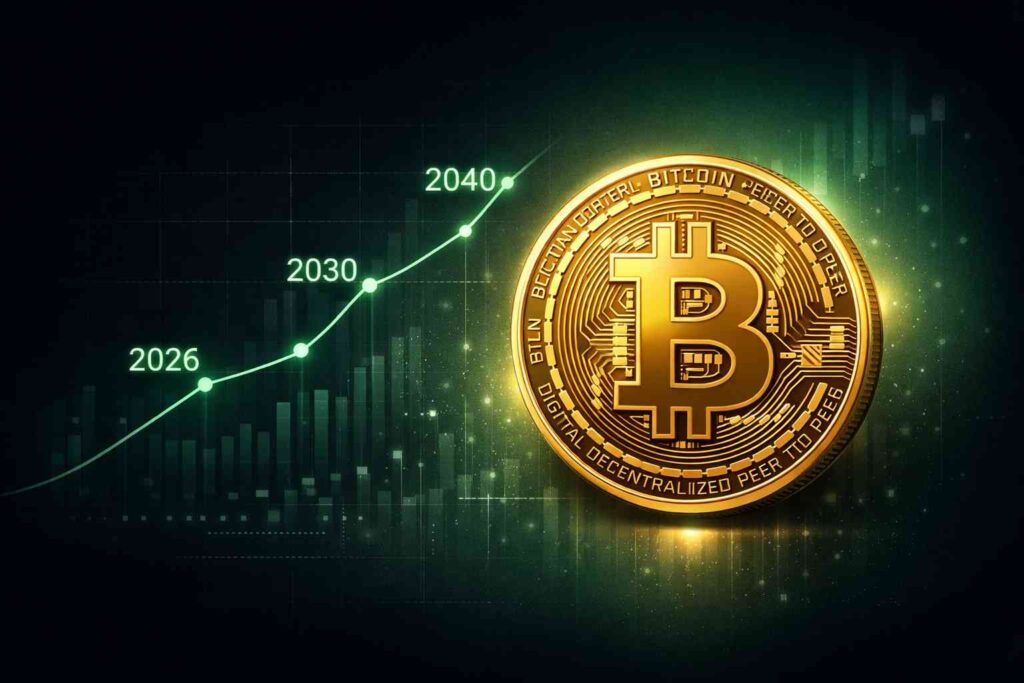
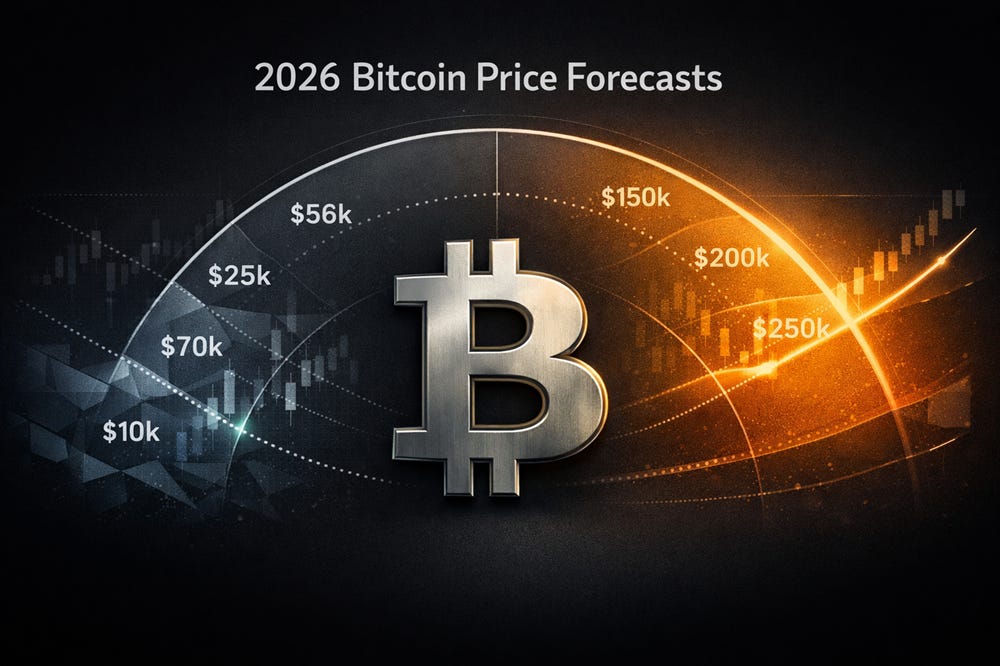
Bull Case: $200,000 – $300,000
Proponents of the bull case point to ETF-driven demand, the global liquidity cycle with central banks cutting interest rates, and geopolitical uncertainty driving capital into digital gold. PlanB has reiterated his Stock-to-Flow model prediction of $500,000+ per Bitcoin during this halving cycle, with a conservative floor around $100,000.
Base Case: $100,000 – $150,000
The base case assumes continued adoption at current rates: steady ETF inflows, gradual corporate treasury adoption following MicroStrategy’s playbook, and stable regulatory environments in the US and EU.
Bear Case: $50,000 – $80,000
Skeptics warn of regulatory crackdowns in key markets, a severe global recession, technological risks from quantum computing, and competition from CBDCs. Tom Lee of Fundstrat has described a worst-case scenario where Bitcoin retests $50,000, but calls that “a generational buying opportunity.”
How to Navigate Bitcoin Investing in 2026
Whether you are a first-time buyer or a seasoned investor, here are practical guidelines:
1. Dollar-Cost Average — Not Timing the Market. DCA smooths out volatility and removes emotion from investing. Studies show DCA into Bitcoin consistently outperforms lump-sum investing over multi-year periods for most retail investors.
2. Self-Custody Is Non-Negotiable. “Not your keys, not your coins” remains the most important rule. The collapse of FTX, Celsius, and BlockFi proved that leaving assets on exchanges carries real risk.
3. Understand the Cycles. Bitcoin moves in distinct four-year cycles tied to halving events. In mid-2026, by historical patterns, we would be in the bull run phase.
4. Ignore the Noise. There are more than 20,000 cryptocurrencies. Most will fail. Bitcoin has been around for 17+ years and survived multiple bear markets. If you are new, starting with Bitcoin alone is the safest approach.
Ready to start trading? Trade Bitcoin and hundreds of other cryptocurrencies on Binance — the world’s largest crypto exchange. Sign up now →
Risks Every Bitcoin Investor Should Know
Volatility remains extreme. Bitcoin routinely moves 5–10% in a single day. Regulatory risk is real. Quantum computing is a long-term threat. Scams and phishing remain rampant. Never share your seed phrase. Never connect your wallet to unknown dApps.
The Bottom Line
Bitcoin in 2026 sits at a fascinating intersection of maturing institutional adoption and its original cypherpunk ethos. The four-year cycle, while still relevant, is being reshaped by ETF inflows, corporate treasuries, and macroeconomic trends.
Whether Bitcoin reaches $200,000 or corrects back to $50,000 in 2026 depends on factors no one can predict with certainty. But one thing is clear: Bitcoin is no longer a fringe experiment. It is a global asset class — and it is here to stay.
Disclaimer: This article is for informational purposes only and does not constitute financial advice. Always do your own research before investing.
Sources
- Fidelity Digital Assets, “2026 Institutional Investor Digital Assets Study”
- PlanB, “Stock-to-Flow Model Update 2026”
- Glassnode, “On-Chain Weekly Report — Halving Impact Analysis”
- CoinShares, “Digital Asset Fund Flows Weekly Report”
- Willy Woo, On-Chain Analysis (via onchaintime.com)

About Guru Tony — Guru Tony is a cryptocurrency analyst and educator with over 5 years of experience in blockchain technology, DeFi, and digital asset investing. He founded Crypto Wealth Hub to help everyday investors navigate cryptocurrency with clear, actionable guides. Read more →